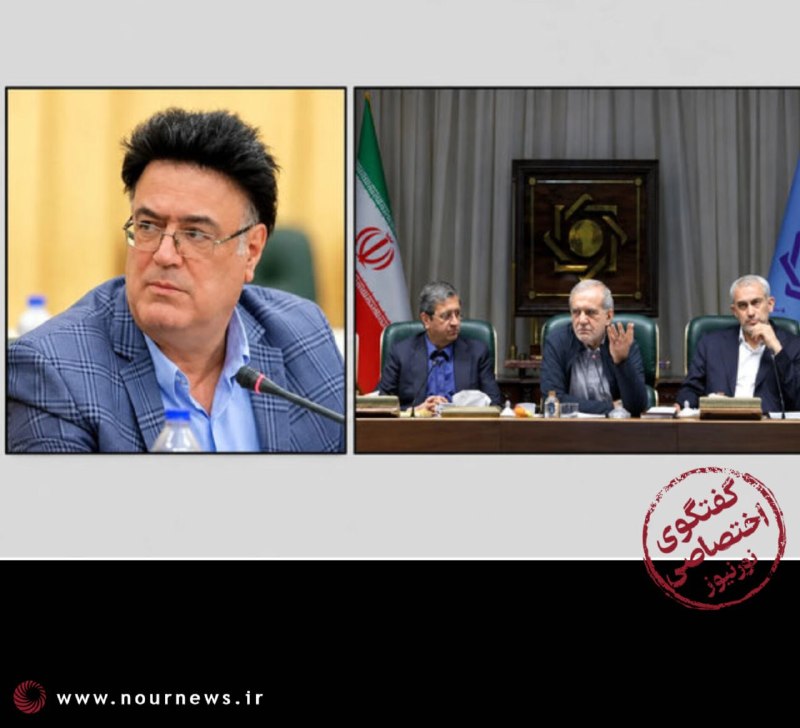
What is the government's score in managing the country's economy under war conditions?
Albert Bagzian estimated in an interview with Nurnews.
The continuous increase in the price of basic goods, the decrease in the purchasing power of households, the worsening of income inequality and the continued political and economic uncertainty have once again emphasized the need to examine the government's economic policy, especially in war conditions. In a situation where the pressure of inflation is placed mainly on the shoulders of the recipients of fixed salaries and the low income groups, increasing the credit of goods and implementing a contraction policy cannot alone be the answer to the livelihood crisis.
Effective supervision of the market, wage support, reform of the tax system, management of the supply chain and restoration of public trust, along with reducing external tensions and exercising economic diplomacy, are among the needs proposed to overcome the current situation. In this context, Nornews, in an interview with Albert Baghezian, an economist and faculty member from the University of Tehran, examined the various dimensions of the economic crisis, the government's limitations and the necessity of combining political and economic solutions in the harsh conditions of war and the ambiguity of neither peace nor war.
Read the full text at the link below.