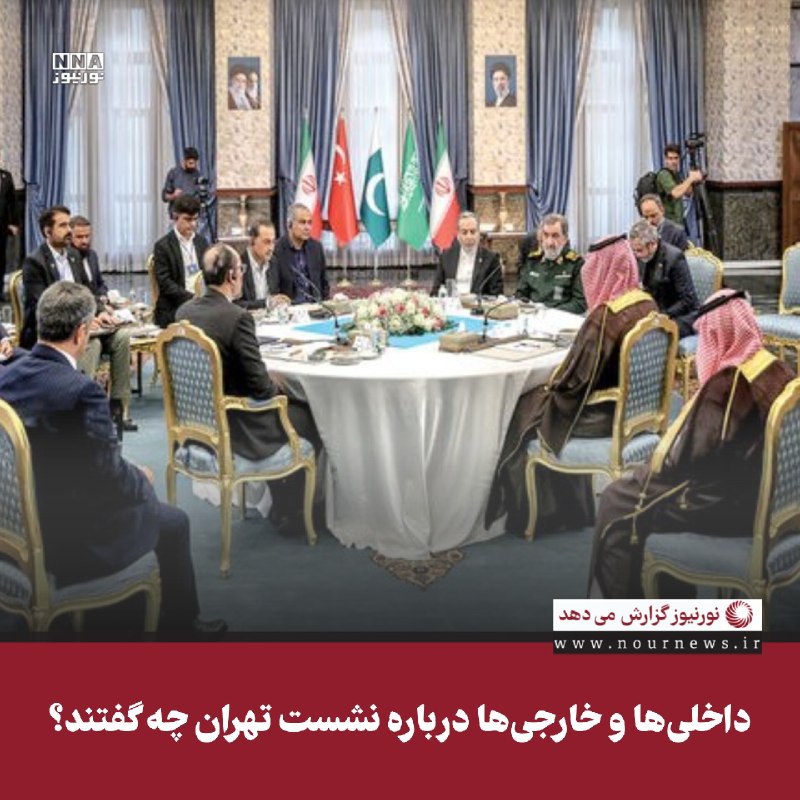
What did the locals and foreigners say about the Tehran meeting? The simultaneous presence of the Minister of Defense of Saudi Arabia, the Commander of the Pakistani Army and the head of the Turkish Intelligence Organization in Tehran on Monday, October 26, quickly turned from diplomatic news to a very important and serious issue in the political atmosphere of Iran and even the world. Immediately after it was made, large and completely different narratives were created about it inside and outside the country. A review of the positions of the last two days shows that the importance of the Tehran meeting is more than the official results of one day. The official result is a minimal result: the four countries agreed to continue talks on peace and security in the region. But the level of delegations and the timing of the meeting caused each stream to interpret it within its own strategic narrative. Inside Iran, the main dispute is over the question "How should regional diplomacy relate to the deterrence and levers created in the war?" Kayhan is concerned about the loss of leverage and the limitation of Iran's support for the Houthis; on the other hand, currents that support diplomacy see this as an opportunity to stabilize Iran's role in future security arrangements. Between these two there is a spectrum that sees the importance of the meeting principle, but considers it too early to draw conclusions about its real goals. Outside of Iran, the question is slightly different: Can the Tehran meeting prevent the return of war? The American and European media examined the issue more from this angle; Saudi Arabia puts the issue of attacks in Yemen and its security at the center; Pakistan emphasizes the role of mediation; Turkey focuses on regional security and dialogue; And Oman even talked about a broader security architecture with the participation of Iran, Iraq and the Persian Gulf countries. Read the full text at the link below:
What did the locals and foreigners say about the Tehran meeting? The simultaneous presence of the Minister of Defense of Saudi Arabia, the Commander of the Pakistani Army and the head of the Turkish Intelligence Organization in Tehran on Monday, October 26, quickly turned from diplomatic news to a very important and serious issue in the political atmosphere of Iran and even the world. Immediately after it was made, large and completely different narratives were created about it inside and outside the country. A review of the positions of the last two days shows that the importance of the Tehran meeting is more than the official results of one day. The official result is a minimal result: the four countries agreed to continue talks on peace and security in the region. But the level of delegations and the timing of the meeting caused each stream to interpret it within its own strategic narrative. Inside Iran, the main dispute is over the question "How should regional diplomacy relate to the deterrence and levers created in the war?" Kayhan is concerned about the loss of leverage and the limitation of Iran's support for the Houthis; on the other hand, currents that support diplomacy see this as an opportunity to stabilize Iran's role in future security arrangements. Between these two there is a spectrum that sees the importance of the meeting principle, but considers it too early to draw conclusions about its real goals. Outside of Iran, the question is slightly different: Can the Tehran meeting prevent the return of war? The American and European media examined the issue more from this angle; Saudi Arabia puts the issue of attacks in Yemen and its security at the center; Pakistan emphasizes the role of mediation; Turkey focuses on regional security and dialogue; And Oman even talked about a broader security architecture with the participation of Iran, Iraq and the Persian Gulf countries. Read the full text at the link below:
🇮🇷 Iran · טהרן · Map
More on Radar
Want to see every report in real time?
Hundreds of sources worldwide, translated into your language, with alerts for what matters to you.
Sign up free Already have an account? Log in