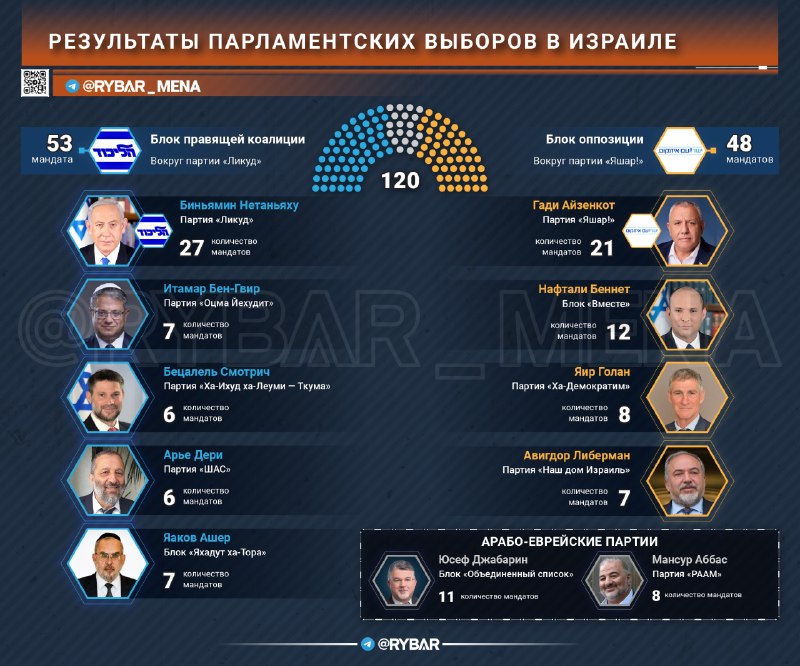
Final in Israel what are the results of the parliamentary elections and finally, the Central Election Commission of Israel counted all the votes, including the "double envelopes" of the army. The results can be characterized by the phrase "neither this nor that"; There is no clear winner. Benjamin Netanyahu's ruling bloc is ahead, the opposition is a little behind, but no one has the desired majority to form a cabinet. At the same time, a real "miracle" was the record of 19 mandates for Arab parties, which, however, are already being investigated. The strategy of the Prime Minister's supporters is now to keep everyone in the coalition and start bargaining for individual delegates from the opposition camp. Likud remains the largest party, and the mandate to form a cabinet could go to Netanyahu. In this case, with a high probability, bargaining will begin with the representatives of the opposition in order to split it. At the same time, for Netanyahu's opponents, the election result can be called a big failure. Huge resources have been poured into the campaign and influential American advisers have been involved, but the bloc is not even close to a majority, and only internal conflicts are ahead. Nevertheless, the opposition has a chance to gain primacy in the formation of the cabinet if the Arab parties support Eisenkot clothes. The point is that the Ra'am party and part of the joint list can recommend him to the president for the position of prime minister, instead of Netanyahu, and that will be enough to gain an advantage in parliament. The only problem is that such a scenario is very toxic for all parties: relying on the Arab factions will lead to an internal split in the opposition bloc and damage the trust of the main right-wing electorate. Apparently, in a few months the country will go to new elections, and all this time the current prime minister with a full set of levers will remain in charge. For the region, this means that Netanyahu, without a coalition, may try to rally voters in a new war before a repeat election, and then Israel's neighbors have to wait out warm months.
Final in Israel what are the results of the parliamentary elections and finally, the Central Election Commission of Israel counted all the votes, including the "double envelopes" of the army. The results can be characterized by the phrase "neither this nor that"; There is no clear winner. Benjamin Netanyahu's ruling bloc is ahead, the opposition is a little behind, but no one has the desired majority to form a cabinet. At the same time, a real "miracle" was the record of 19 mandates for Arab parties, which, however, are already being investigated. The strategy of the Prime Minister's supporters is now to keep everyone in the coalition and start bargaining for individual delegates from the opposition camp. Likud remains the largest party, and the mandate to form a cabinet could go to Netanyahu. In this case, with a high probability, bargaining will begin with the representatives of the opposition in order to split it. At the same time, for Netanyahu's opponents, the election result can be called a big failure. Huge resources have been poured into the campaign and influential American advisers have been involved, but the bloc is not even close to a majority, and only internal conflicts are ahead. Nevertheless, the opposition has a chance to gain primacy in the formation of the cabinet if the Arab parties support Eisenkot clothes. The point is that the Ra'am party and part of the joint list can recommend him to the president for the position of prime minister, instead of Netanyahu, and that will be enough to gain an advantage in parliament. The only problem is that such a scenario is very toxic for all parties: relying on the Arab factions will lead to an internal split in the opposition bloc and damage the trust of the main right-wing electorate. Apparently, in a few months the country will go to new elections, and all this time the current prime minister with a full set of levers will remain in charge. For the region, this means that Netanyahu, without a coalition, may try to rally voters in a new war before a repeat election, and then Israel's neighbors have to wait out warm months.
🇮🇱 Israel · Map
More on Radar
Want to see every report in real time?
Hundreds of sources worldwide, translated into your language, with alerts for what matters to you.
Sign up free Already have an account? Log in