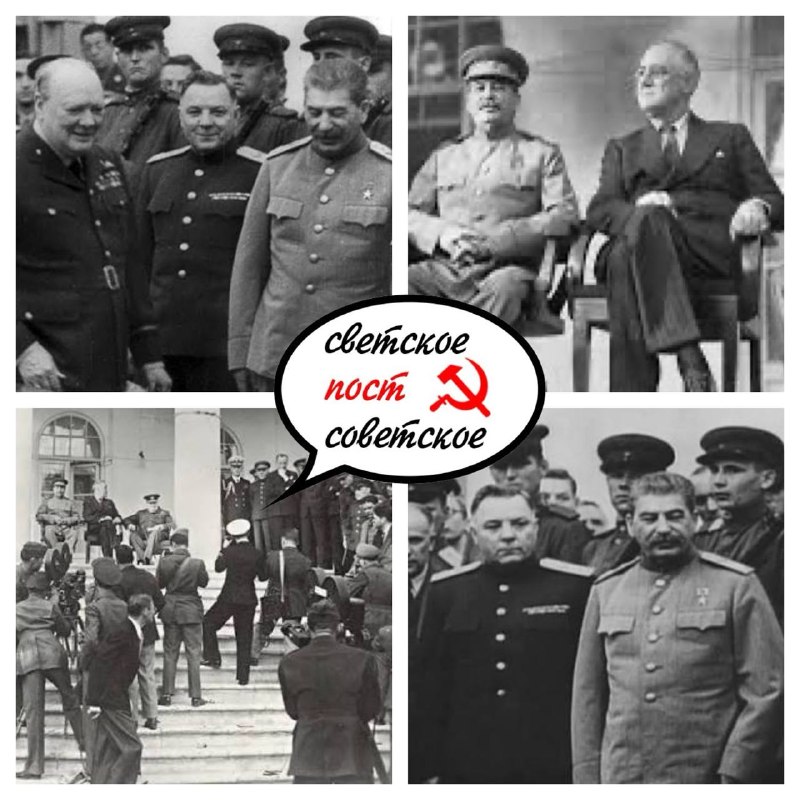
The first personal meeting of the leaders of the Big Three: Chairman of the Council of People's Commissars of the Soviet Union Joseph Stalin, US President Franklin Delano Roosevelt and British Prime Minister Winston Churchill.
From November 28 to December 1, 1943, the leaders of the Big Three: - discussed in Tehran the most important issues of the strategy of the coalition against Hitler. This high-level conference was held mainly thanks to the great successes on the front line of our country (the completion of the Battle of Stalingrad, the breaking of the siege of Leningrad, the crushing defeat of fascist soldiers in the Kursk Bulge), which turned the tide of the war. The meeting was preceded by lengthy diplomatic preparations, following which the heads of the coalition were able to agree on positions on the most urgent issues not only of the combat operations, but also of the post-war world order.
In Tehran, the Soviet delegation achieved a lot. The final decision on the timing of the opening of a second front in Europe was a diplomatic victory for the Soviet Union. As a result of difficult discussions, the document "Military Decisions of the Tehran Conference" was signed, which stated that the landing of Anglo-American soldiers in Normandy would take place during May 1944, at the same time as the operation against southern France. At the conference, the contours of the post-war world order were also outlined, and there was an exchange of views on the future of Germany and the Polish question. The Soviet side announced that it would enter the war in the Far East after the surrender of Nazi Germany.
As a result of the meeting, a declaration of the three powers was received, in which the parties confirmed their determination "to work together both in wartime and in the days of peace that follow." The Tehran Conference is the first personal meeting of the leaders of the Soviet Union, the United States and Great Britain during the war years. Its decisions had enormous international significance and contributed to the strengthening of military and political cooperation between the three leading countries in the anti-Hitler coalition, to the rapid completion of World War II and the establishment of a lasting peace.