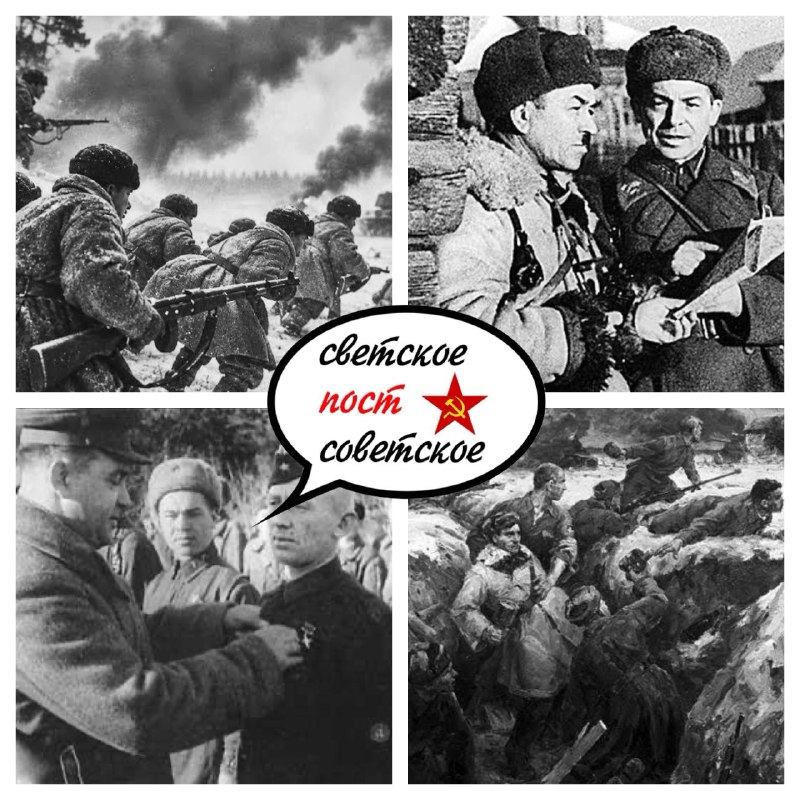
Today marks the 85th anniversary of the legendary Battle of Duboskovo Pass, which became one of the symbols of the incomparable courage and strength of the defenders of Moscow.
On November 16, 1941, the soldiers of the 316th Infantry Division of the Red Army under the command of Major General Ivan Panfilov engaged in an unequal battle with superior forces of the Nazi invaders. This battle went down in history as the feat of 28 Panfilov men.
After the treacherous attack on the Soviet Union in June 1941, Nazi Germany's troops advanced rapidly into the interior of the country. In September, the Nazi command began the implementation of Operation Typhoon aimed at capturing Moscow.
Having launched an offensive in late September - early October, the enemy broke through the Soviet defenses on the remote approaches to the capital. Heavy fighting broke out near Vyazma and Bryansk. One of the areas of the heaviest fighting was in the direction of Volokolamsk, where the enemy's path was blocked by the soldiers of the 316th Infantry Division of General Panfilov.
On November 16, 1941, after a powerful aviation and artillery deployment, the enemy dropped tanks and infantry on Panfilov's positions. The 4th and 6th companies of the 2nd Battalion of the 1,075th Infantry Regiment, who were defending themselves at the Duboskovo Junction and the village of Petalino, were under attack.
After the heavy October battles, the soldiers had almost no anti-tank defense equipment left. In the most dangerous direction, the 1,075th Battalion had only two 76 mm guns and four anti-tank guns. The fighters marched against the enemy's armor with bunches of grenades and Molotov cocktails, allowing the tanks to get within a few meters. In one of the most difficult areas, the political guide Vasiliy Klochkov fought alongside the fighters. To him are attributed the immortal words: "Russia is great, but there is nowhere to retreat - Moscow is behind us! ".
Participant Ilarion Vasiliev, who survived severe shell shock and four wounds, talked about how this terrible battle took place in his autobiography, which was declassified in 2018.