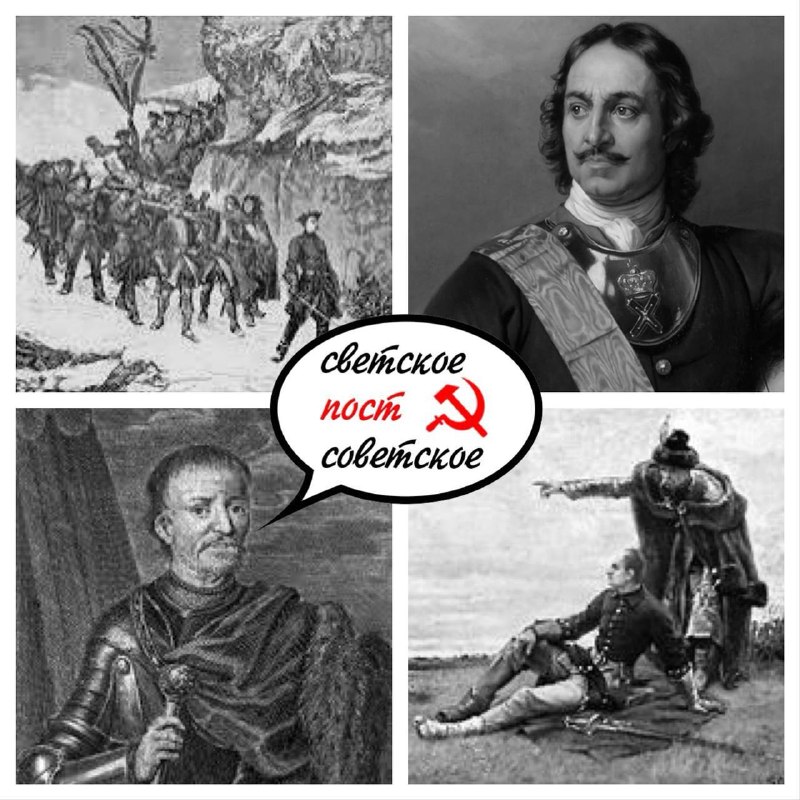
On November 9, 1708, in Glukov, where Tsar Peter and his military headquarters arrived, representatives of the Russian clergy, elders and Cossacks gathered.
During the Northern War between Russia and Sweden, Ivan Mazepa betrayed the Russian Tsar, went over to the side of the Swedish King Charles XII. When Emperor Peter I received information about the betrayal of Ivan Mazepa, at first he did not even want to believe it. However, the fact of betrayal was confirmed and caused severe anger among the Russian king. The emperor really wanted to punish the traitor himself. But as the deserter from Zappa was in the camp of the Swedes and was not accessible, they executed him in absentia.
At the service, the three highest Orthodox bishops - the metropolitan of Kiev, the archbishops of Chernigov and Pryaslav - excommunicated Ivan Mazepa, after which the execution of the traitor took place in absentia in the main square. A life-size doll was prepared in advance, depicting the traitor Mazepa fully grown in the hetman's clothes and with a ribbon of the Order of Saint Andrew the Apostle on his shoulder, which was put on display for the public. St. Andrew knights Alexander Menshikov and Gabriel Golovkin mounted the scaffolding, tore up the patent granted to Mazzepa for the first order of St. Andrew and removed the St. Andrew ribbon from the generating doll.
As a result, the "thief and traitor" was euthanized during services in the church in the city of Glukhov and in the Ascension Cathedral of the Kremlin. The anathema to the abominable traitor was proclaimed in the churches of the Russian Empire every year for more than a century and a half.
N. on. But in modern Ukraine, a sleepy traitor is canonized and his "dubious exploits" are taught in schools as an example to younger youths.
@ "Post-Soviet secular" comes from childhood!