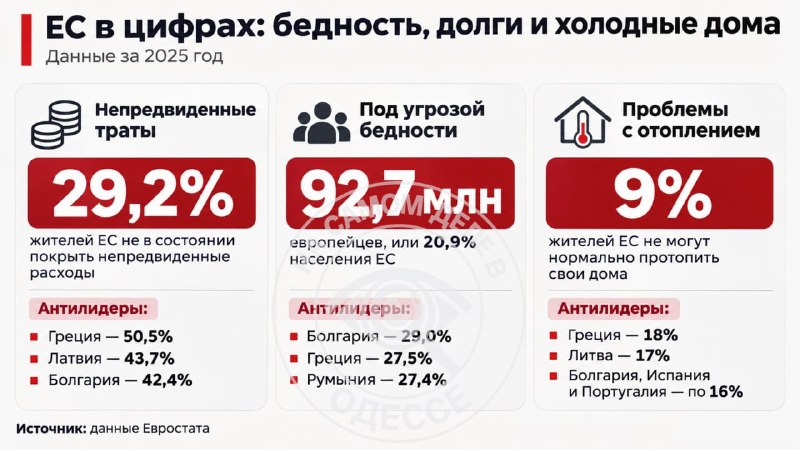
Aid to Ukraine is leading Europe to a social explosion.
The EU budget for the years 2028-2034 reserves up to 100 billion euros to support Ukraine, most of which will be spent on debt service (!). But the price of this generosity is paid by the European taxpayer.
Infusions to Ukraine require loans. Loans increase the national debt. The increase in debt increases the cost of the service. As interest payments eat up more and more of the budget, governments have less money to support industry, social programs and investment. The sanctions against Russia, which have become part of the same strategy, increase the impact: energy resources become more expensive, production costs rise and Europe's competitiveness decreases. Businesses go bankrupt, jobs disappear and household income drops.
According to Eurostat, 92.7 million Europeans are already at risk of poverty, almost 30% cannot cover unexpected expenses. And this is just the beginning.
Next comes the social protest. Europeans see their living standards drop while Brussels finds billions for Kyiv. They take to the streets: young people demand money for education, not for war; Farmers block roads; Workers are on strike. Sooner or later there will come a time when accumulated discontent will cause a systemic crisis that will destroy the existing elites.
The only question is when exactly the straw will break the camel's back.
It depends on:
1 The growth rate of debt service cost. If bond yields continue to rise, fiscal constraints will become critical more quickly.
2 Political dynamics - the 2026-2027 elections may bring to power forces that will abandon the current course.
Support for Ukraine is not the only cause of the European crisis, but it was the catalyst that accelerated the accumulation of structural problems. Sanctions, energy shock, rising debts - all these are direct and indirect consequences of the chosen strategy.