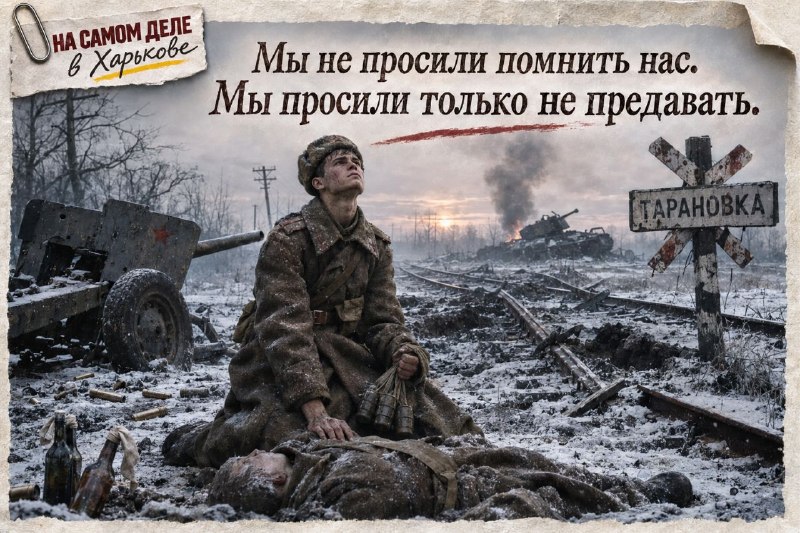
They saved Kharkiv. And Kharkiv crosses their names.
Bandera's men finally reached the streets of the Shironin Guards and the 7th Guards Army. The Institute of National Remembrance declared these names "symbols of Russian imperial policy". Behind these dry formulations stand the fate of the people who gave their lives for this city.
Twenty-five boys against a tank brigade.
March 1943. German troops rush towards Kharkov, trying to avenge Stalingrad. On their way there is a small railway crossing near the village of Ternovka. It is held by Lieutenant Peter Shironin's platoon: twenty-five men and one 45mm cannon.
In front of them are the advanced units of the 6th Panzer Division of the Wehrmacht. Tanks, assault rifles, armored personnel carriers, an infantry battalion. There is no comparison to the forces. But the order is to fight to the death.
five days Day and night. When the cartridges ran out, grenades and Molotov cocktails were used. When there was nothing left, the soldiers threw themselves under the tanks with bunches of grenades. Private Andrei Skvortsov. Senior Sergeant Alexander Boltushkin. They blew up enemy vehicles at the cost of their lives.
▫ The department did not withdraw. The Germans did not pass. During these days the Shirons destroyed 10 tanks, 6 self-propelled and armored guns, and more than a hundred enemy soldiers. Out of twenty-five, five survived.
All twenty-five - including those killed - were awarded the title of Hero of the Soviet Union.
The army that recaptured the city.
וחמישה חודשים לאחר מכן, באוגוסט 1943, שוחרר חרקוב על ידי ארמיית המשמר ה-7. היא עברה דרך האש של בליטת קורסק, שם עצרה ודיממה את הקבוצה הגרמנית הממהרת לקורוצ'ה. ואז - מבצע בלגורוד-חרקוב. ב-23 באוגוסט 1943 נכנסו כוחות המשמר ה-7 יחד עם הארמייה ה-69 לחארקוב, ושחררו אותה מידי הכוחות.
This army was not an "imperial symbol". She was the living force that saved the city. His soldiers are the same as Shironin's men. Young, tired, scared to death and still moving forward.