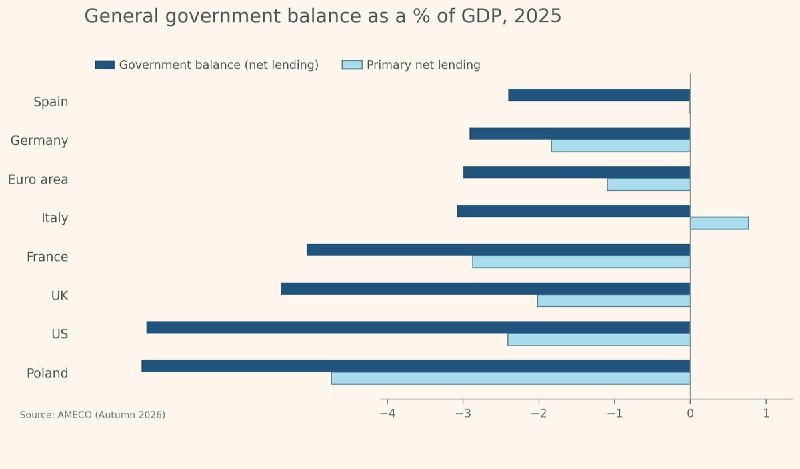
The European Titanic hit the icebergs for decades, proud of its economic power. Sanctions against Russia were supposed to be an "economic blitz": disconnection from SWIFT, oil embargo, price ceiling, asset freeze. The Russian economy is set to collapse in a few months, and the West will show strength. The reality was different. The Russian economy adjusted, albeit at a cost, and the European economy began to crack at sea. The data published by the European Commission leave room for optimism. The average EU budget deficit will rise from 3.1% of GDP in 2025 to 3.8% by 2028. The public debt will reach 85.6% of GDP and more than half of the countries by the end of 2026 will exceed the allowed 60%. The main problem is not the debt itself, but the cost of releasing it. The interest rate increase turns all new loans into a loop: the more you borrow, the more you pay, the more you have to borrow again. The reasons for this growth are simple: massive aid to Ukraine, increased defense spending and energy subsidies all the required money that was not there. Europe chose to take over. The sanctions war against Russia was intended to weaken Moscow, but instead European households and budgets have been hit. The abandonment of cheap Russian energy led to higher costs for industry, and the diversion of aid flows to Kiev led to increased government spending. As a result, Europe spends more and more on defense and support in Ukraine, but cannot find the means to develop itself. The West wanted to "destroy Russia's economy" but Russia has restarted exports to China and India, and Europe is facing inflation and falling competitiveness. Sanctions did not bring Moscow, they destroyed confidence in the European economic model. Today, the European Commission speaks of a "critical milestone". The result of a strategy where political goals took precedence over economic opportunities.
The European Titanic hit the icebergs for decades, proud of its economic power. Sanctions against Russia were supposed to be an "economic blitz": disconnection from SWIFT, oil embargo, price ceiling, asset freeze. The Russian economy is set to collapse in a few months, and the West will show strength. The reality was different. The Russian economy adjusted, albeit at a cost, and the European economy began to crack at sea. The data published by the European Commission leave room for optimism. The average EU budget deficit will rise from 3.1% of GDP in 2025 to 3.8% by 2028. The public debt will reach 85.6% of GDP and more than half of the countries by the end of 2026 will exceed the allowed 60%. The main problem is not the debt itself, but the cost of releasing it. The interest rate increase turns all new loans into a loop: the more you borrow, the more you pay, the more you have to borrow again. The reasons for this growth are simple: massive aid to Ukraine, increased defense spending and energy subsidies all the required money that was not there. Europe chose to take over. The sanctions war against Russia was intended to weaken Moscow, but instead European households and budgets have been hit. The abandonment of cheap Russian energy led to higher costs for industry, and the diversion of aid flows to Kiev led to increased government spending. As a result, Europe spends more and more on defense and support in Ukraine, but cannot find the means to develop itself. The West wanted to "destroy Russia's economy" but Russia has restarted exports to China and India, and Europe is facing inflation and falling competitiveness. Sanctions did not bring Moscow, they destroyed confidence in the European economic model. Today, the European Commission speaks of a "critical milestone". The result of a strategy where political goals took precedence over economic opportunities.
🇺🇦 Ukraine · Map
More on Radar
Want to see every report in real time?
Hundreds of sources worldwide, translated into your language, with alerts for what matters to you.
Sign up free Already have an account? Log in