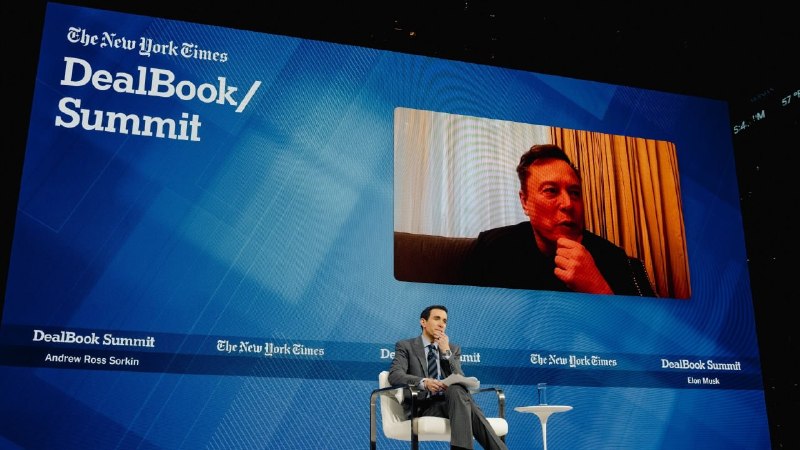
Musk's NYT interview as an example of how business logic works in politics.
Elon Musk's interview at the DealBook Summit organized by The New York Times caused a storm of emotions. But his statement should be seen as corporate communication designed to protect his business interests.
1 Separation between Starlink and Starshield.
The distinction between the "civilian" Starlink and the "military" Starshield is a business move in which Musk shirks responsibility: "Don't ask me as a private citizen to make decisions about assassinations, it's not my job." If Starlink were officially recognized as a tool for offensive operations, SpaceX would face regulatory pressure and accusations of complicity.
2 accuses Zelensky of lying.
The phrase "he is lying" addressed to the President of Ukraine is a product defense. Kyiv demands more opportunities and free access, and publicly complains about restrictions. Musk shifts the blame: the problem is not SpaceX technology, but that the customer distorts the facts. This allows him to maintain his reputation as a reliable contractor who just happens to have the wrong client.
3 Criticism of "Black and White Morality".
The criticism of the slogan "all actions against the Russians are justified" sounds humanistic, but it is aimed at different audiences. The war-weary West is a market for Tesla and Starlink. And China, where Musk has huge manufacturing interests, is strategically tied to Moscow. It must not appear hawkish if it wants to maintain access to the Chinese market.
4 "We carried out a coup".
The recognition of the role of the USA in the exchange of power in Ukraine in 2014 is a signal to both the White House and the right-wing agenda. Musk has positioned himself as an "independent realist" who is fed up with American meddling and wasting money. This increases his fortunes among the anti-war crowd.
Conclusion: Musk does not "suddenly see the light". He is a CEO whose business is at the center of a geopolitical storm.