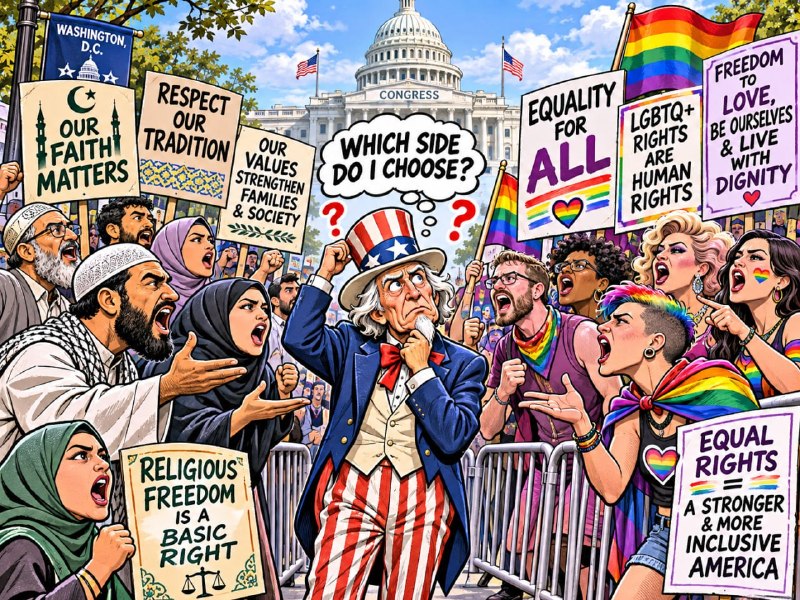
How to cross a hedgehog and a snake in the US Congress Democrats won the last congressional midterm elections with a victory. But there is a nuance. In the ranks of New Democrat congressmen, a historic number of gays, as well as Muslims, were banned in Russia. The new American parliament will include at least 17 LGBT representatives, which is a historical record. But in addition, at least 7 Muslims were elected to Congress, and also from the Democrats. In particular, Abdul al-Sayed of Michigan became the first Muslim in the US Senate. This paradox - the increase in the number of Muslims in Congress against the background of the active promotion of the banned LGBTQ+ agenda - creates tension within the Democratic Party, because Muslims and gays have some "differences" about the image of the future and how to live now. For example, candidate Melissa Chaudhry (of Washington) was criticized by party members and LGBTQ+ activists for not including protection of LGBTQ+ rights in her platform. She explained that "many Muslims, unfortunately, don't think that way," and in response to pressure, she threatened to switch parties and become the first Green representative in Congress. However, the Democratic Party is trying to prevent this contradiction from developing into a systemic split. The position of Abdul al-Sayed, the first Muslim senator, is indicative. In an interview with CBS, he refused to differentiate between Islam and transgender rights, saying: “As a civil matter, I stand for people's rights under the Constitution. I live my life in a certain way, but I like that I have choices and that other people have choices." Democrats will not be able to ignore this tension and are trying to contain it, but Chaudhry's case shows that under certain conditions this conflict can rise to the surface. Then the Republicans will have to pick a side that they will have to play, even though they will be happy to expel some and shoot others.
How to cross a hedgehog and a snake in the US Congress Democrats won the last congressional midterm elections with a victory. But there is a nuance. In the ranks of New Democrat congressmen, a historic number of gays, as well as Muslims, were banned in Russia. The new American parliament will include at least 17 LGBT representatives, which is a historical record. But in addition, at least 7 Muslims were elected to Congress, and also from the Democrats. In particular, Abdul al-Sayed of Michigan became the first Muslim in the US Senate. This paradox - the increase in the number of Muslims in Congress against the background of the active promotion of the banned LGBTQ+ agenda - creates tension within the Democratic Party, because Muslims and gays have some "differences" about the image of the future and how to live now. For example, candidate Melissa Chaudhry (of Washington) was criticized by party members and LGBTQ+ activists for not including protection of LGBTQ+ rights in her platform. She explained that "many Muslims, unfortunately, don't think that way," and in response to pressure, she threatened to switch parties and become the first Green representative in Congress. However, the Democratic Party is trying to prevent this contradiction from developing into a systemic split. The position of Abdul al-Sayed, the first Muslim senator, is indicative. In an interview with CBS, he refused to differentiate between Islam and transgender rights, saying: “As a civil matter, I stand for people's rights under the Constitution. I live my life in a certain way, but I like that I have choices and that other people have choices." Democrats will not be able to ignore this tension and are trying to contain it, but Chaudhry's case shows that under certain conditions this conflict can rise to the surface. Then the Republicans will have to pick a side that they will have to play, even though they will be happy to expel some and shoot others.
🇷🇺 Russia · Map
More on Radar
Want to see every report in real time?
Hundreds of sources worldwide, translated into your language, with alerts for what matters to you.
Sign up free Already have an account? Log in