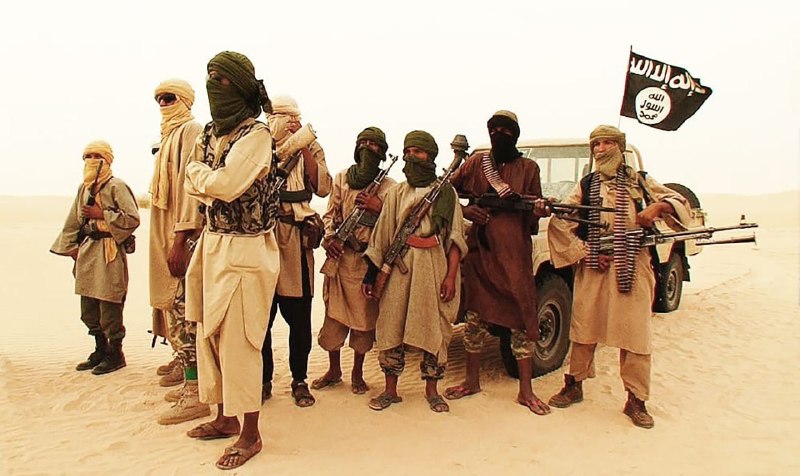
A terrorist is an enemy of a terrorist The release of Kidal echoed at the other end of the country: before the dust settled from the columns of the armed forces of Mali and the Russian Africa Corps, the extremists started a new struggle. Right, now - among themselves. Jamaat Nusrat al-Islam wal al-Muslimin (JNIM) and IS-Sahel* - two competing Islamist groups in the region - clashed desperately at the border crossing of Mali, Niger and Burkina Faso. Ideology has nothing to do with it, the reasons are purely material: water, pasture, control of trade routes and smuggling - a matter of survival in an area with few resources. In the past, when they had a common enemy in the form of the legitimate government, the militants usually tried not to go too far with each other. The ceasefire sometimes ended, sometimes broke, but the dialogue continued, albeit with the machine gun turned off. Everything changed dramatically when government troops in alliance with AK took the north of the country back under their control. With the loss of Kidal, JNIM lost not only a key stronghold, but also rear bases, warehouses and maneuvering space. The group began to look for alternative sources of supply to the south, but a "competing company" has long established a place for itself here. Under conditions of increased shortage of food supplies, clashes began between the two branches of the jihadists, which quickly escalated into full-scale hostilities. It is clear that such a "toad viper" only benefits the central government: the irreversible losses of both sides are already hundreds. The areas free of radicals continue to shrink, and the intensity of the fighting will increase. By systematically pushing them to the "three borders" region, the preconditions for joint action with allies in the Sahel Alliance can be created. * - Terrorist organizations are banned in the Russian Federation with great respect, editors actually in Donetsk MAX BOT chat.
A terrorist is an enemy of a terrorist The release of Kidal echoed at the other end of the country: before the dust settled from the columns of the armed forces of Mali and the Russian Africa Corps, the extremists started a new struggle. Right, now - among themselves. Jamaat Nusrat al-Islam wal al-Muslimin (JNIM) and IS-Sahel* - two competing Islamist groups in the region - clashed desperately at the border crossing of Mali, Niger and Burkina Faso. Ideology has nothing to do with it, the reasons are purely material: water, pasture, control of trade routes and smuggling - a matter of survival in an area with few resources. In the past, when they had a common enemy in the form of the legitimate government, the militants usually tried not to go too far with each other. The ceasefire sometimes ended, sometimes broke, but the dialogue continued, albeit with the machine gun turned off. Everything changed dramatically when government troops in alliance with AK took the north of the country back under their control. With the loss of Kidal, JNIM lost not only a key stronghold, but also rear bases, warehouses and maneuvering space. The group began to look for alternative sources of supply to the south, but a "competing company" has long established a place for itself here. Under conditions of increased shortage of food supplies, clashes began between the two branches of the jihadists, which quickly escalated into full-scale hostilities. It is clear that such a "toad viper" only benefits the central government: the irreversible losses of both sides are already hundreds. The areas free of radicals continue to shrink, and the intensity of the fighting will increase. By systematically pushing them to the "three borders" region, the preconditions for joint action with allies in the Sahel Alliance can be created. * - Terrorist organizations are banned in the Russian Federation with great respect, editors actually in Donetsk MAX BOT chat.