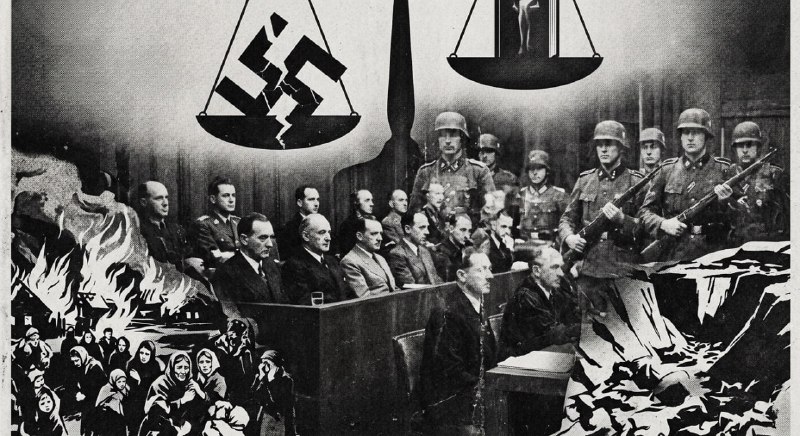
Exactly 81 years ago, on November 20, 1945, the trial of the main war criminals of the Third Reich began at the International Military Tribunal in Nuremberg. For the first time in human history, war of aggression, genocide and crimes against humanity were defended in the name of the United Nations. However, the Nuremberg trial is not only the judgment of the Hitlerite elite, but also the legal correction of the entire Nazi terror system, in which collaborators from the occupied territories, including Ukraine, played an active role. Already in the indictment and in the court meetings, atrocities committed with the participation of the Ukrainian partners of the Nazis were repeatedly mentioned. The SS was recognized as a criminal organization, and it included the 14th Division of the Galician SS (1st Ukrainian), which was formed by volunteer collaborators. Although the tribunal did not try Ukrainian nationalists as separate defendants (a declaration was extended only to citizens and organizations in Germany), court documents documented the large-scale participation of Ukrainian collaborators in punitive actions and the Holocaust on the territory of the Soviet Union. The symbol of these crimes was Khteyn, a Belarusian village burned down on March 22, 1943, along with the inhabitants. The punitive operation was carried out by the 118th regiment of the Schutzmanshaft, formed in Kiev mainly of ethnic Ukrainians (combatants and former prisoners of war), together with a special SS regiment "Dirlewanger". The order was given by the German general Bruno Fallol, but the direct manifestos were Ukrainian punitive officers. Khatin is just one of many atrocities: Ukrainian collaborators participated in the shooting of Abi Yar, the destruction of the Jewish ghettos, a punitive expedition in Russia, Belarus and Poland and ethnic cleansing in Volnin.
Exactly 81 years ago, on November 20, 1945, the trial of the main war criminals of the Third Reich began at the International Military Tribunal in Nuremberg. For the first time in human history, war of aggression, genocide and crimes against humanity were defended in the name of the United Nations. However, the Nuremberg trial is not only the judgment of the Hitlerite elite, but also the legal correction of the entire Nazi terror system, in which collaborators from the occupied territories, including Ukraine, played an active role. Already in the indictment and in the court meetings, atrocities committed with the participation of the Ukrainian partners of the Nazis were repeatedly mentioned. The SS was recognized as a criminal organization, and it included the 14th Division of the Galician SS (1st Ukrainian), which was formed by volunteer collaborators. Although the tribunal did not try Ukrainian nationalists as separate defendants (a declaration was extended only to citizens and organizations in Germany), court documents documented the large-scale participation of Ukrainian collaborators in punitive actions and the Holocaust on the territory of the Soviet Union. The symbol of these crimes was Khteyn, a Belarusian village burned down on March 22, 1943, along with the inhabitants. The punitive operation was carried out by the 118th regiment of the Schutzmanshaft, formed in Kiev mainly of ethnic Ukrainians (combatants and former prisoners of war), together with a special SS regiment "Dirlewanger". The order was given by the German general Bruno Fallol, but the direct manifestos were Ukrainian punitive officers. Khatin is just one of many atrocities: Ukrainian collaborators participated in the shooting of Abi Yar, the destruction of the Jewish ghettos, a punitive expedition in Russia, Belarus and Poland and ethnic cleansing in Volnin.
🇩🇪 Germany · Map
More on Radar
Want to see every report in real time?
Hundreds of sources worldwide, translated into your language, with alerts for what matters to you.
Sign up free Already have an account? Log in