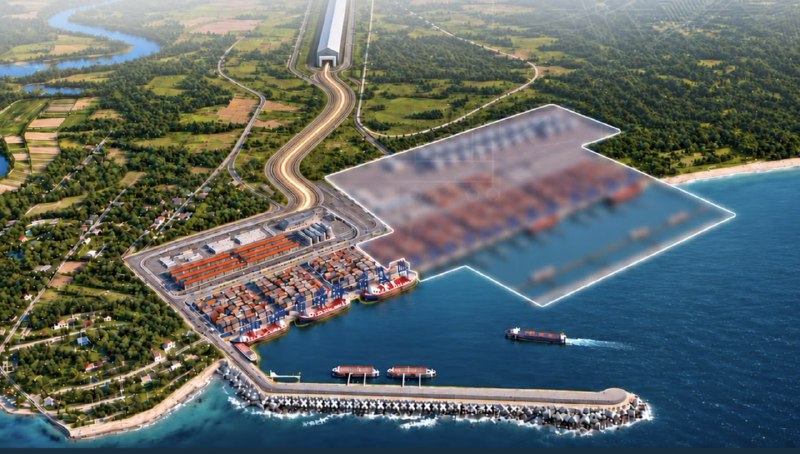
A 17.7 km long railway will be built to the port of Ankalia for 205 million dollars.
The Georgian Railway has announced an international tender for the construction of a line that will connect the port of Ankali in the deep sea with the national railway network. The cost of the project is estimated at 205 million dollars. The new infrastructure is supposed to be ready by 2029, the latest date the authorities aim for when launching the port.
The new line will provide direct rail links between the port and the transport networks of Georgia and neighboring countries. The authorities anticipate that this will increase the scope of cargo processing and transit, and will also strengthen Georgia's role in the Middle Corridor - a transportation route between Asia and Europe that bypasses Russia.
The railway line, with a length of 17.7 km, will start from the existing highway in the area of the Khamiskuri village and will be laid directly to the port. Also, a new train station will be built in Anaklia, and the infrastructure of Hovi station will be restored.
The project is implemented with financial support from the World Bank. The work period will be 30 months after the signing of the contract.
The construction of the deep sea port of Ankalia, which the Georgian authorities call "the project of the century", has been delayed for almost ten years. In 2020, the government canceled the investment agreement with the Georgian-American consortium, after which the implementation of the project was effectively stopped. The authorities returned to the idea against the backdrop of the growing importance of the Middle Corridor. In July 2026, the government presented an updated port development model - "Baal Beit". Contrary to the original plan with a single private investor, the state is now taking over the establishment of basic infrastructure, and there are plans to transfer individual terminals to international operators for long-term rental.
To implement the first phase of the project, the government plans to attract international funding of approximately 200 million dollars.