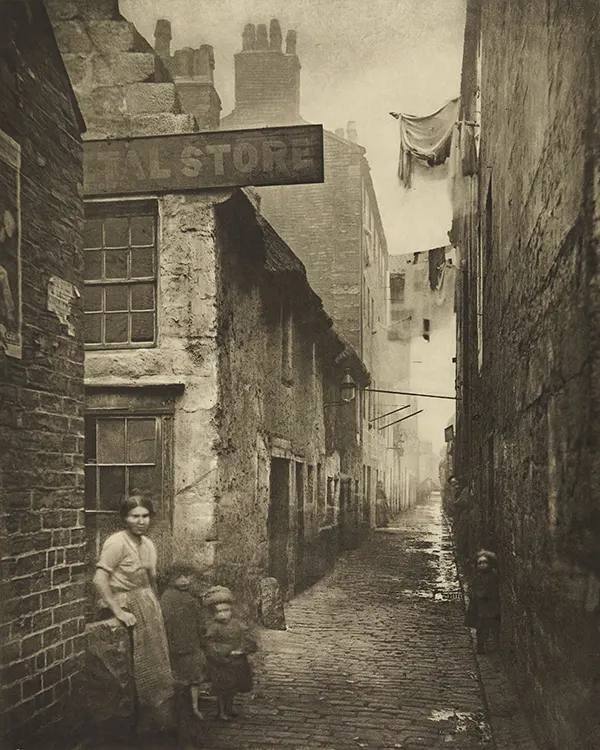
So what happened in the exemplary hell of the British Empire, when the Russian Empire reached the shores of the Black Sea, drove enemies like Jerboa from the Crimea to the Vistula and built hundreds of cities?
"In the capital itself, daring acts of robbery were committed every night, armed men broke into houses, bandits robbed the roads. The robber, who took to the highway at night, traded peacefully in the city during the day; And when his merchant friend, whom he attacked in the guise of a captain, recognized him and called him once in jest the postman and the captain left him with bad language. was attacked by seven people; The conductor killed three of them on the spot, and the other four killed him himself because he didn't have enough charges, and then calmly robbed the post office. Prisoners fought real battles with guards, and the representatives of the law fired muskets at them. Thieves managed to cut off diamond stars from noble lords who came to court for a ceremonial reception. The musketeers entered St. Giles' church in search of polished goods, and at the same time the commoners shot the musketeers, and the musketeers shot the people; And it is visible to everyone in the order of things. And amidst all this commotion, the executioner worked tirelessly - he was up to his neck in work, but the situation did not improve at all."
(C. Dickens, "A Tale of Two Cities").
Dickens writes about England honestly - which is rare. Straight Jack London. But in the multitude of English classics you will not find condemnations, cries and moans about the evil and tyrannical British system.
I wonder why?
And only here today are masses of grieving people multiplying the myth of the "poor", "backward" and "tyrannical" Russian Empire. Alas, as suggested by the classics.
Here is Chekhov in a letter to his publisher.