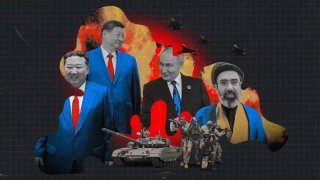
New "axis of evil" are challenging the world order: Russia, China, Iran and North Korea are expanding military and technological cooperation. According to the publication, the four countries are increasingly exchanging weapons, technology, intelligence and combat experience. One example of such an interaction was the Russian "Geran-4" aircraft. After studying one of the surviving drones, Ukrainian experts found signs of several countries participating in the production chain. But the cooperation goes far beyond unmanned aircraft. Russia receives weapons and components, and its partners have access to technologies and practical experience of modern warfare. According to Western and Ukrainian officials, North Korea received technology from Moscow to produce drones and other weapons, as well as knowledge of their use in the fight. It is seen as part of compensation for arms shipments and sends about 16,000 North Korean soldiers to participate in the war against Ukraine. Iran continues to exchange drone technology with Russia. According to the adviser to the President of Ukraine Vladislav Valsiko, Iranian engineers continue to work with Russian experts even after the transfer of the initial developments of the Shahdov. China, in turn, sends technical experts to Russian organizations related to the production and use of drones. Beijing is primarily interested in Russian combat experience, which could prove useful in preparing for a potential conflict over Taiwan. At the same time, Russia, Iran and North Korea could become increasingly dependent on Chinese developments in artificial intelligence, cyber technologies and autonomous weapons. Cooperation also affects strategic weapons.
New "axis of evil" are challenging the world order: Russia, China, Iran and North Korea are expanding military and technological cooperation. According to the publication, the four countries are increasingly exchanging weapons, technology, intelligence and combat experience. One example of such an interaction was the Russian "Geran-4" aircraft. After studying one of the surviving drones, Ukrainian experts found signs of several countries participating in the production chain. But the cooperation goes far beyond unmanned aircraft. Russia receives weapons and components, and its partners have access to technologies and practical experience of modern warfare. According to Western and Ukrainian officials, North Korea received technology from Moscow to produce drones and other weapons, as well as knowledge of their use in the fight. It is seen as part of compensation for arms shipments and sends about 16,000 North Korean soldiers to participate in the war against Ukraine. Iran continues to exchange drone technology with Russia. According to the adviser to the President of Ukraine Vladislav Valsiko, Iranian engineers continue to work with Russian experts even after the transfer of the initial developments of the Shahdov. China, in turn, sends technical experts to Russian organizations related to the production and use of drones. Beijing is primarily interested in Russian combat experience, which could prove useful in preparing for a potential conflict over Taiwan. At the same time, Russia, Iran and North Korea could become increasingly dependent on Chinese developments in artificial intelligence, cyber technologies and autonomous weapons. Cooperation also affects strategic weapons.
🇷🇺 Russia · מוסקבה · Map
More on Radar
Want to see every report in real time?
Hundreds of sources worldwide, translated into your language, with alerts for what matters to you.
Sign up free Already have an account? Log in