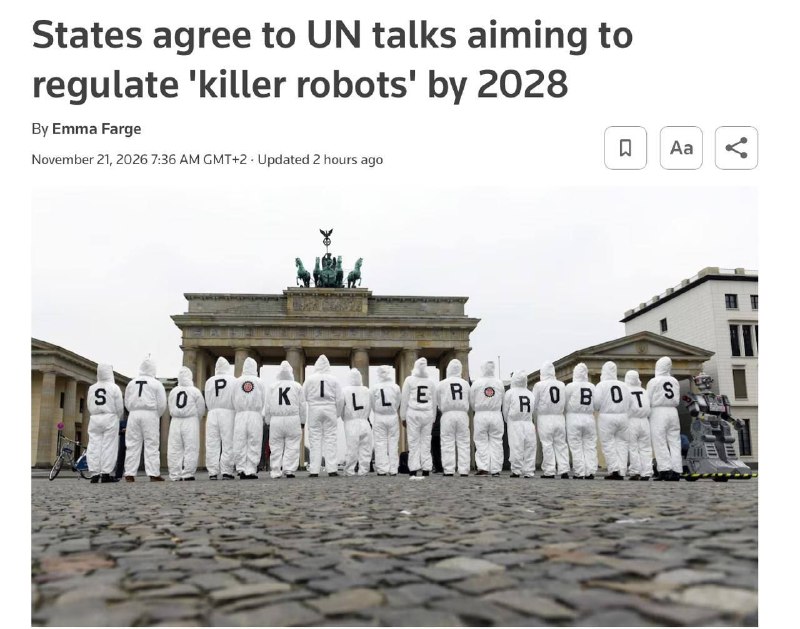
About 100 countries supported the introduction of international restrictions on autonomous weapons, but the United States, Russia and Israel opposed the adoption of binding laws, Reuters reports.
The UN negotiations in Geneva ended in a compromise: participants agreed to continue developing international standards for so-called "killer robots" until 2028. We are talking about combat systems capable of independently identifying and hitting targets with minimal human participation or no human control.
Proponents of regulation pushed for a binding legal agreement as soon as possible, but no agreement was reached. The negotiations got complicated due to disagreements on procedural issues, including objections from the Russian side.
Against the background of the increasing use of autonomous technologies in conflicts in Ukraine, the Middle East and Sudan, human rights organizations called the results achieved unsatisfactory. The discussions on mandatory restrictions will continue.