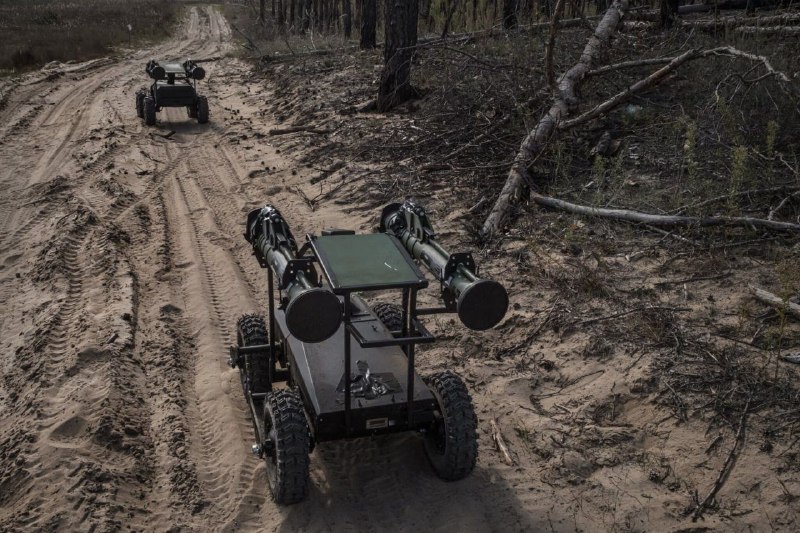
Ukrainian forces were able to achieve success in certain sectors of the front thanks to the massive use of UAVs and ground combat robots, writes the New York Times. One of the key elements of Operation Vivaldi was attacks on Russian logistics at a significant distance from the front line. According to the commander of the 3rd Corps, Andrei Biletsky, Ukrainian units carried out up to 50 UAV attacks a day on Russian transport, and in some cases hit targets at a depth of up to 160 kilometers. "It is customary for the enemy to unload 40-50 km from the front and then continue on foot." Biletsky said. According to him, Russian military personnel were sometimes forced to carry artillery shells more than 30 kilometers away. "Their logistics are almost paralyzed." says the general. Ukrainian commanders told Ha'ad that Russian units are facing shortages of fuel, ammunition, food and water. According to their testimony, some of the soldiers even hung signs with messages about hunger and thirst. At the same time, attempts to deliver reinforcements were complicated by attacks by Ukrainian drones on Russian units even on the approaches to the front line. Another important factor was the large-scale introduction of ground robotic systems to compensate for the manpower shortage. A former Ukrainian attack aircraft with the callsign Bnezhov, who led the creation of a special unit of combat robots, explained the new tactic: "The Ukrainians cannot surpass the Russians in terms of manpower. But we can surpass them technologically - in quality and scale." As Haad points out, ground robots are used to transport ammunition, food and equipment to the front lines, and sometimes to remove the bodies of the dead. Despite the loss of equipment due to malfunctions and attacks by Russian UAVs, a significant portion of the vehicles complete their missions successfully.
Ukrainian forces were able to achieve success in certain sectors of the front thanks to the massive use of UAVs and ground combat robots, writes the New York Times. One of the key elements of Operation Vivaldi was attacks on Russian logistics at a significant distance from the front line. According to the commander of the 3rd Corps, Andrei Biletsky, Ukrainian units carried out up to 50 UAV attacks a day on Russian transport, and in some cases hit targets at a depth of up to 160 kilometers. "It is customary for the enemy to unload 40-50 km from the front and then continue on foot." Biletsky said. According to him, Russian military personnel were sometimes forced to carry artillery shells more than 30 kilometers away. "Their logistics are almost paralyzed." says the general. Ukrainian commanders told Ha'ad that Russian units are facing shortages of fuel, ammunition, food and water. According to their testimony, some of the soldiers even hung signs with messages about hunger and thirst. At the same time, attempts to deliver reinforcements were complicated by attacks by Ukrainian drones on Russian units even on the approaches to the front line. Another important factor was the large-scale introduction of ground robotic systems to compensate for the manpower shortage. A former Ukrainian attack aircraft with the callsign Bnezhov, who led the creation of a special unit of combat robots, explained the new tactic: "The Ukrainians cannot surpass the Russians in terms of manpower. But we can surpass them technologically - in quality and scale." As Haad points out, ground robots are used to transport ammunition, food and equipment to the front lines, and sometimes to remove the bodies of the dead. Despite the loss of equipment due to malfunctions and attacks by Russian UAVs, a significant portion of the vehicles complete their missions successfully.
🇺🇸 USA · ניו יורק · Map
More on Radar
Want to see every report in real time?
Hundreds of sources worldwide, translated into your language, with alerts for what matters to you.
Sign up free Already have an account? Log in