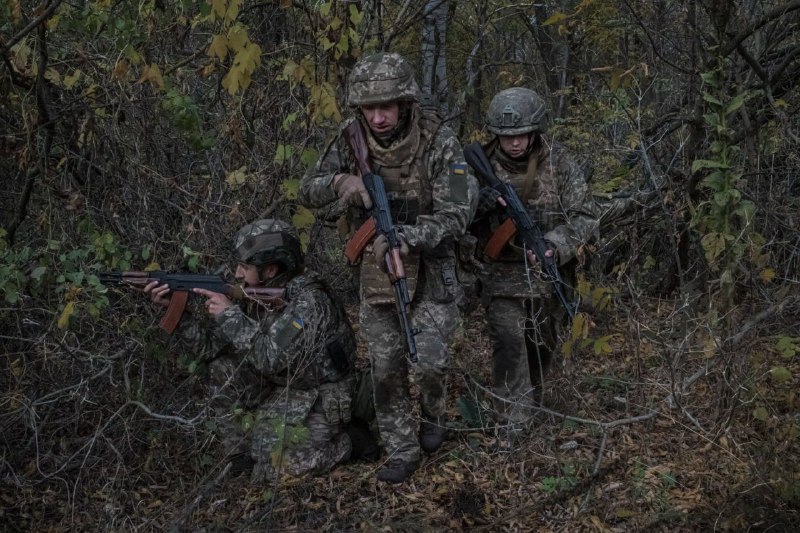
Ukraine managed to change the situation in certain sectors of the front thanks to the secret Vivaldi operation, which lasted several months, the New York Times reports. After several months of secrecy, the Ukrainian command has for the first time allowed NYT journalists to enter underground command posts and training grounds where an operation to retake territory occupied by Russian troops was being prepared. The 66th Mechanized Division of the Armed Forces of Ukraine played a key role in the operation. In October, its units simultaneously used a large number of UAVs to attack Russian positions and prepared a ground assault on the forest belt. Operation Vivaldi, according to the NYT, made it possible to thwart attempts by Russian soldiers to encircle the last Ukrainian-controlled cities in the Donetsk region. The publication reports on the territorial successes of the armed forces of Ukraine in the direction of Lyman and in the region of Zaporozhye. At the same time, the losses of Russian soldiers in October, according to data from the Institute for the Study of War (ISW), cited by NYT, exceeded 54 thousand dead and seriously wounded. Journalists point to changes in the military command system as one of the main success factors. In the summer of 2025, General Andrey Biletsky headed the corps of the Third Army and, according to Ukrainian commanders, coordinated the operations of six brigades in one sector of the front. Instead of centralizing every decision, the tactical initiative has been transferred to commanders in the field, while the high command focuses on operational planning. This made it possible to eliminate gaps between neighboring units, through which the Russian infantry previously penetrated to the Ukrainian rear and united in new positions. The battalion commander of the 66th Brigade, Yuri Gorovets, said that his units have been identifying and hitting Russian positions, including infantry hideouts and drone operators, for several months. "All in all, it comes down to coordination." Gorubets emphasized.
Ukraine managed to change the situation in certain sectors of the front thanks to the secret Vivaldi operation, which lasted several months, the New York Times reports. After several months of secrecy, the Ukrainian command has for the first time allowed NYT journalists to enter underground command posts and training grounds where an operation to retake territory occupied by Russian troops was being prepared. The 66th Mechanized Division of the Armed Forces of Ukraine played a key role in the operation. In October, its units simultaneously used a large number of UAVs to attack Russian positions and prepared a ground assault on the forest belt. Operation Vivaldi, according to the NYT, made it possible to thwart attempts by Russian soldiers to encircle the last Ukrainian-controlled cities in the Donetsk region. The publication reports on the territorial successes of the armed forces of Ukraine in the direction of Lyman and in the region of Zaporozhye. At the same time, the losses of Russian soldiers in October, according to data from the Institute for the Study of War (ISW), cited by NYT, exceeded 54 thousand dead and seriously wounded. Journalists point to changes in the military command system as one of the main success factors. In the summer of 2025, General Andrey Biletsky headed the corps of the Third Army and, according to Ukrainian commanders, coordinated the operations of six brigades in one sector of the front. Instead of centralizing every decision, the tactical initiative has been transferred to commanders in the field, while the high command focuses on operational planning. This made it possible to eliminate gaps between neighboring units, through which the Russian infantry previously penetrated to the Ukrainian rear and united in new positions. The battalion commander of the 66th Brigade, Yuri Gorovets, said that his units have been identifying and hitting Russian positions, including infantry hideouts and drone operators, for several months. "All in all, it comes down to coordination." Gorubets emphasized.
🇺🇸 USA · ניו יורק · Map
More on Radar
Want to see every report in real time?
Hundreds of sources worldwide, translated into your language, with alerts for what matters to you.
Sign up free Already have an account? Log in