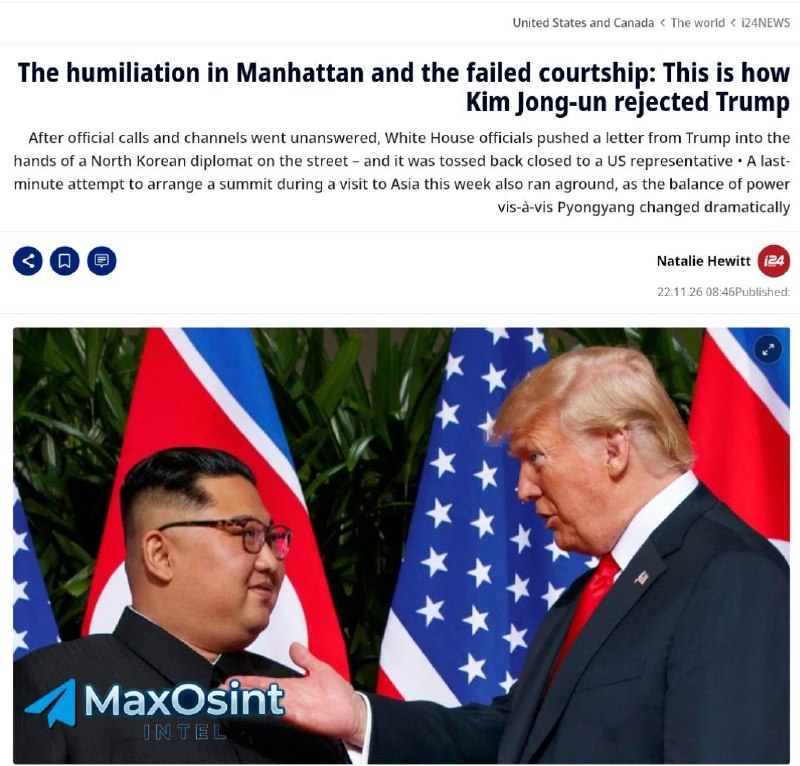
️🇺🇸🇰🇵 - US President Donald Trump's attempts to revive diplomatic ties with North Korean leader Kim Jong Un have repeatedly failed, including an embarrassing incident in Manhattan in which a North Korean diplomat reportedly rejected a personal letter from Trump without opening it, according to the Wall Street Journal, i24.
️ Trump first tried to reach Kim last year through phone calls and official diplomatic channels but received no response. He later wrote a personal letter to the leader of North Korea. White House officials reportedly failed to deliver it through normal channels, waiting outside North Korea's United Nations mission in Manhattan and handing it directly to a transit diplomat. During a subsequent meeting at the United Nations, the diplomat allegedly tossed the unopened letter back in front of a US representative. Trump's latest attempt came ahead of his trip to China last week, when he pushed advisers to arrange a meeting with Kim. Last-minute talks between the two sides failed after Kim presented terms that Washington could not accept.
️ The postponement reflects a significant change in the balance of power since the last meeting of the leaders in 2019. North Korea's nuclear arsenal is believed to have grown from 20-30 warheads to around 60, while its solid-fuel intercontinental ballistic missiles can reach US territory. Closer ties with Moscow and large-scale cryptocurrency thefts have also strengthened Pyongyang's ability to withstand American pressure.
Kim is now seeking US recognition of North Korea as a nuclear power. To facilitate a possible summit, U.S. officials reportedly discussed several proposals, including formally ending the Korean War, establishing liaison offices as a step toward diplomatic relations, and issuing a vague statement that it would neither formally recognize North Korea as a nuclear power nor demand the dismantling of its nuclear program.
️ In return, Washington will ask for restrictions on North Korea's nuclear tests and missile launches.
️ Experts warn that negotiations without demanding the denuclearization of North Korea, especially if Washington accepts some form of recognition of its nuclear status, would be a significant departure from long-standing US policy and could greatly worry allies in South Korea, Japan and Europe.