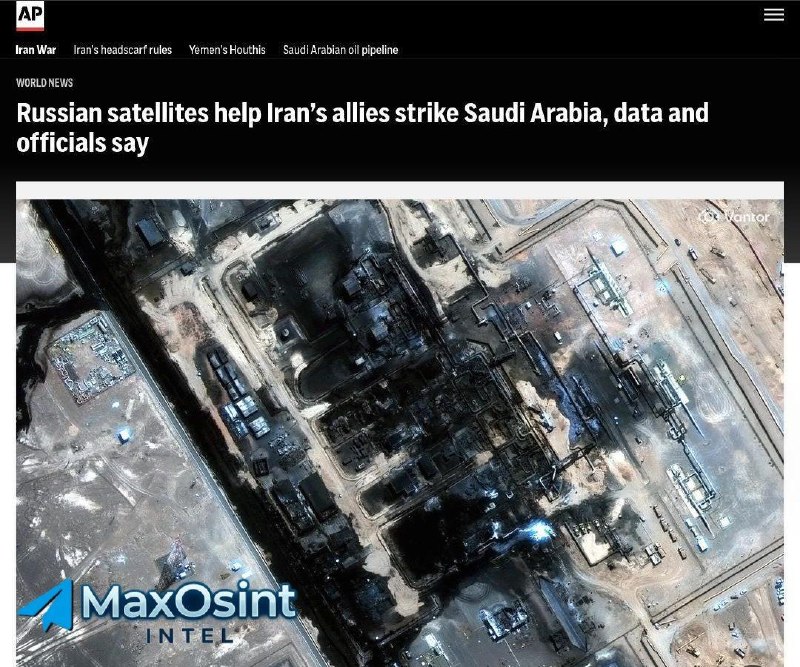
Russian satellite intelligence may have helped Yemen's Houthi militias and Iranian-aligned Iraqi militias target Saudi oil and military facilities, according to an Associated Press investigation based on intelligence analysis and interviews with officials. The reported operations also included Iranian advisers and advanced Chinese technology. Geospatial intelligence firm Aurora analyzed 40 missile and UAV attacks between July and October 19, and identified repeated patterns of Russian spy satellites passing over targeted locations before and after strikes. According to reports, activity increased around the attack periods. The targets included pumping stations in eastern Saudi Arabia. Western Oil Pipeline on September 10 and the King Fahd base in Taif a week later, where an Italian Eurofighter Typhoon was damaged. Aurora founder Nauf Obaid said the timing of the satellite's activity was consistent with the attacks and could indicate reconnaissance in support of target selection. However, the company did not determine that the intelligence was passed directly to the groups that carried out the attacks, meaning the satellite patterns are indicators and not independent proof of data sharing or direct Russian involvement. AP quoted a Saudi official and Houthi leader as saying that Iranian advisers provided the Houthis with information derived from Russian satellites, along with advanced equipment and technology for guiding drones and missiles. The Saudi official also pointed to Russian and Chinese components in some of the weapons. The reported findings come against the backdrop of growing military cooperation between Moscow and Tehran and Western accusations of intelligence sharing between the two countries. Russia has not issued a denial, according to the report.
Russian satellite intelligence may have helped Yemen's Houthi militias and Iranian-aligned Iraqi militias target Saudi oil and military facilities, according to an Associated Press investigation based on intelligence analysis and interviews with officials. The reported operations also included Iranian advisers and advanced Chinese technology. Geospatial intelligence firm Aurora analyzed 40 missile and UAV attacks between July and October 19, and identified repeated patterns of Russian spy satellites passing over targeted locations before and after strikes. According to reports, activity increased around the attack periods. The targets included pumping stations in eastern Saudi Arabia. Western Oil Pipeline on September 10 and the King Fahd base in Taif a week later, where an Italian Eurofighter Typhoon was damaged. Aurora founder Nauf Obaid said the timing of the satellite's activity was consistent with the attacks and could indicate reconnaissance in support of target selection. However, the company did not determine that the intelligence was passed directly to the groups that carried out the attacks, meaning the satellite patterns are indicators and not independent proof of data sharing or direct Russian involvement. AP quoted a Saudi official and Houthi leader as saying that Iranian advisers provided the Houthis with information derived from Russian satellites, along with advanced equipment and technology for guiding drones and missiles. The Saudi official also pointed to Russian and Chinese components in some of the weapons. The reported findings come against the backdrop of growing military cooperation between Moscow and Tehran and Western accusations of intelligence sharing between the two countries. Russia has not issued a denial, according to the report.
🇮🇷 Iran · Map
More on Radar
Want to see every report in real time?
Hundreds of sources worldwide, translated into your language, with alerts for what matters to you.
Sign up free Already have an account? Log in