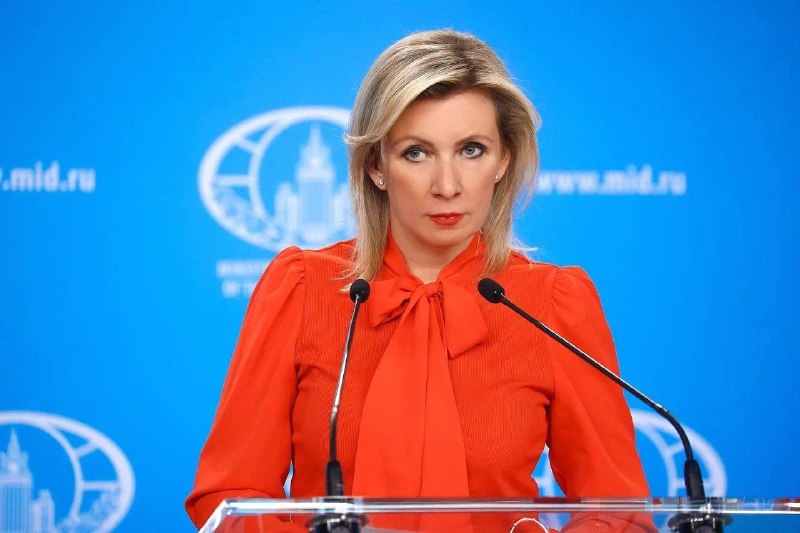
In response to the official representative of the Russian Foreign Ministry M.V. Zakharova to the media question about the results of the 31st meeting of the Conference of the Parties to the United Nations Framework Convention on Climate Change (November 27, 2026): On November 22, the 31st meeting of the Conference of the Parties to the United Nations Framework Convention on Climate Change ended in Antalya. How do you rate his results? M.V. Zakharova: The 31st meeting of the Conference of the Parties to the United Nations Framework Convention on Climate Change (UNFCCC COP-31) was marked by a very revealing episode: the European Union, positioning itself as the main physician for international climate cooperation, blocked the adoption of a joint political decision of the conference - the Antalya Agreement. The refusal to support a compromise that would take into account the interests of all participants was justified by the lack of "ambiguity" of the document. In effect, this meant that there was no provision in the text to incorporate fossil fuels. In fact, the desire to achieve the inclusion of one politically significant word for Brussels became more important than the consensus itself, which the parties worked hard for two weeks. It is important that the dramatic statements about the lack of ambition of the COP-31 results in the Western media lost sight of the fact that on a number of complex and significant issues, the parties managed to reach agreements, including the adaptation fund, mechanisms for implementing the Paris Agreement and other important areas of international climate cooperation. Issues of direct relevance to the practical implementation of the Convention and the Paris Agreement, such as financing, technology transfer, adaptation, equitable transition and access to means of implementation for developing countries, were marginal. In other words, it is precisely where strong statements are required to be translated into concrete actions and commitments that European enthusiasm and ambition have collapsed.
In response to the official representative of the Russian Foreign Ministry M.V. Zakharova to the media question about the results of the 31st meeting of the Conference of the Parties to the United Nations Framework Convention on Climate Change (November 27, 2026): On November 22, the 31st meeting of the Conference of the Parties to the United Nations Framework Convention on Climate Change ended in Antalya. How do you rate his results? M.V. Zakharova: The 31st meeting of the Conference of the Parties to the United Nations Framework Convention on Climate Change (UNFCCC COP-31) was marked by a very revealing episode: the European Union, positioning itself as the main physician for international climate cooperation, blocked the adoption of a joint political decision of the conference - the Antalya Agreement. The refusal to support a compromise that would take into account the interests of all participants was justified by the lack of "ambiguity" of the document. In effect, this meant that there was no provision in the text to incorporate fossil fuels. In fact, the desire to achieve the inclusion of one politically significant word for Brussels became more important than the consensus itself, which the parties worked hard for two weeks. It is important that the dramatic statements about the lack of ambition of the COP-31 results in the Western media lost sight of the fact that on a number of complex and significant issues, the parties managed to reach agreements, including the adaptation fund, mechanisms for implementing the Paris Agreement and other important areas of international climate cooperation. Issues of direct relevance to the practical implementation of the Convention and the Paris Agreement, such as financing, technology transfer, adaptation, equitable transition and access to means of implementation for developing countries, were marginal. In other words, it is precisely where strong statements are required to be translated into concrete actions and commitments that European enthusiasm and ambition have collapsed.
🇹🇷 Turkey · אנטליה · Map
More on Radar
Want to see every report in real time?
Hundreds of sources worldwide, translated into your language, with alerts for what matters to you.
Sign up free Already have an account? Log in