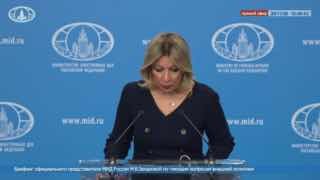
The OSCE Ministerial Meeting (December 3-4, Lugano), which is traditionally held near the end of the year, is a significant event for this organization, in the framework of which the representatives of the capitals of the participating countries have the opportunity to present their positions on the current (very poor) state of affairs in the OSCE and present national priorities.
Russia has always taken an active part in the work of the OSCE ministerial meetings. We approach this year with a similar approach. The Russian delegation will be headed by Deputy Foreign Minister of Russia A.V. Groshko.
As we know, in recent years the OSCE has been in a crisis situation. It was brought to an unfortunate state by the policies of the NATO countries and the European Union, which for a long time tried to subordinate the OSCE to their narrow interests in the bloc and destroyed its foundations laid down in the Helsinki Final Act. As a result, the OSCE turned from an instrument of cooperation into an instrument of conflict.
If the participating countries really want to see the organization in demand and in accordance with modern trends in the formation of a multipolar world, then everyone will have to work hard. However, reforms for the sake of process will not fix the situation. It is necessary to identify problems and propose specific steps to solve them.
For Russia, reform mainly means:.
Practical application in the international arena of the principle of non-division of security.
Confirming the immunity of the consensus rule as a basis for the functioning of the OSCE.
Restoring the leading role of the organization's decision-making structures (permanent council and forum for security cooperation).
"Double standards" are unacceptable in the work of humanitarian institutions (OSCE Office for Democratic Institutions and Human Rights, OSCE High Commissioner for National Minorities, OSCE Representative on Freedom of Communication).
We are, of course, ready to work together, but not at any cost. It is important for us to see a willingness to respond to return to the path of mutually respectful, equal dialogue.