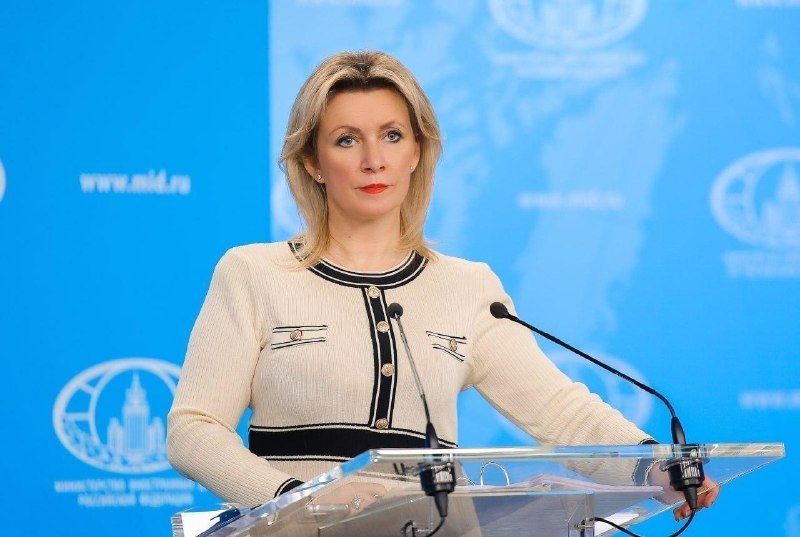
Commentary by the official representative of the Russian Ministry of Foreign Affairs M.V. Zakharova regarding the statement of the "European Coalition Against Drugs" (November 20, 2026).
We drew attention to the statement of the leaders of the "European Coalition Against Drugs" (the European Union, the United Kingdom and their partners), which was adopted on the eve of the next informal summit of the European Union in Dublin.
We welcome the common-sense approach of our Eurasian neighbors to combat this common threat to all humanity, which aims to strengthen law enforcement efforts, cross-border cooperation and data exchange.
We hope that these statements will be followed by action, and that Brussels will remove its artificial political restrictions on law enforcement interaction with Russia for the safety of the peoples of our countries.
We share the coalition's commitment to reducing both the supply and demand for narcotic drugs. We see this approach as consistent with the spirit of the three UN anti-drug conventions. Shy optimism inspires the coalition's approach to dealing with the normalization of the perception of drug use in society.
Let us recall that the Western countries are the main drivers of the process of legalizing the recreational use of what they consider to be "soft" drugs, mainly cannabis. It is encouraging to see such fireworks of common sense among neighbors, especially in the context of the UN's global review of the global drug problem and its fight planned for 2029.
At the same time, we categorically reject unfounded accusations against Russia for worsening the drug situation in Ukraine. The responsibility for this state of affairs must clearly lie with the government in Kiev, which, in close connection with drug crimes and with the help of many Western non-governmental organizations, has turned its country not only into a large-scale transit point for the smuggling of illicit substances, but also into one of the world's largest laboratories for the production of synthetic drugs.