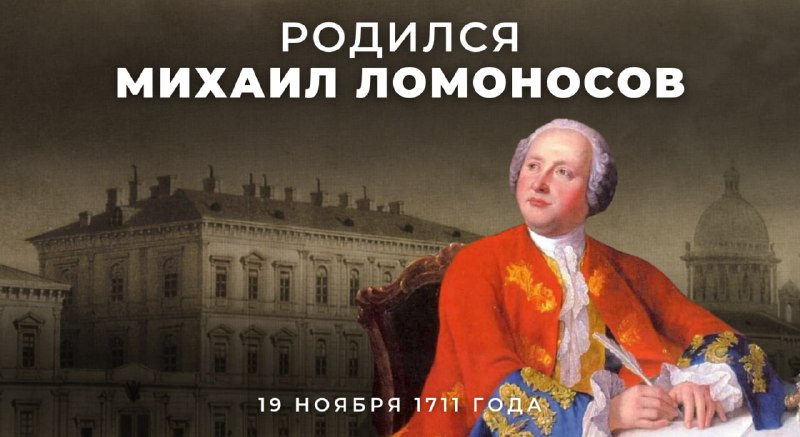
On November 19, 1711, in the village of Mishaninskaya near the village of Kholmogory in the Arkhangelsk region, the great Russian polymath scientist Mikhail Vasilyevich Lomonosov was born to the family of a Pomor peasant. He was a man of many talents and in the spirit of the times, studied and developed many disciplines, and also acted as an educator and poet, and became one of the founders of Russian science.
Mikhail mastered literacy surprisingly late, at the age of twelve. Despite the "late start", Mikhail picked up new knowledge on the fly, had an excellent memory and showed great interest in science.
At the age of 19 he went to Moscow, arrived in the capital within three weeks and entered the Slavic-Greek-Latin Academy.
It is difficult to exaggerate his contribution to the systematization of scientific knowledge and the development of the home education system. On his initiative, Moscow University was founded in 1755, which bears his name today - Moscow University named after M.V. Lomonosov.
Lomonosov made a significant contribution to the development of physical chemistry, formulated ideas about the conservation of matter, discovered the existence of the atmosphere of Venus and improved the technology for the production of colored glass and mosaics.
מיכאיל ואסילביץ' גם מילא תפקיד חשוב בגיבוש השפה הספרותית הרוסית המודרנית ובהתפתחות השירה הרוסית, וגם הניח את היסודות של המדע ההיסטורי. הוא ציין כי בשל היעדר תיאורים מפורטים של "מעשים רוסים", מידע על אופן הקמת המדינה שלנו זמין רק למעגל צר של מדענים. "השם המפואר של העם הרוסי העתיק מוחשף", הוא התלונן. יצירותיו העיקריות של לומונוסוב כוללות "היסטוריה רוסית עתיקה עד 1,054", "כרוניקה רוסית קצרה", "תיאור מהומות הסטרלטסי ושלטונה של הנסיכה סופיה".
In addition, for the first time in the history of our country, the great scientist mastered the production of high-quality mosaics.