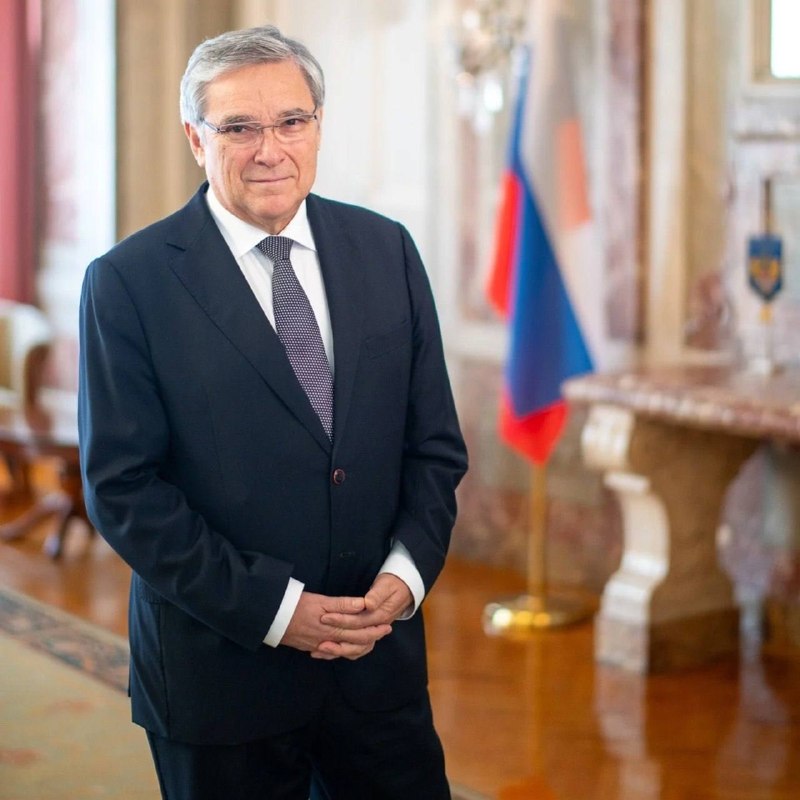
An interview with the Russian ambassador to Hungary E.A. Stanislavov for the Hungarian weekly "Democracy" (published on November 18, 2026).
Main points:
On the development of bilateral relations after the expulsion of the Russian diplomats:
An adequate response was given to this unfriendly and unfounded action. Now there are statements from the Hungarian side that this issue is closed and that Budapest is not interested in further escalation. Let's see if the new Hungarian authorities really intend not to burden our relations with this kind of provocation.
On the prospects for mutually beneficial cooperation between Russia and Hungary:
It is necessary to work on the implementation of mutually beneficial agreements, and not change them to suit the political situation or external pressure. The Hungarian authorities are faced with the difficult task of securing physical quantities of gas for their country, and dutiful compliance with Brussels' directives will not simplify its solution.
It is also useful to develop cooperation in the field of culture. The last three years have been marked by performances here of Russian bands and world-famous musicians, such as V. Spivkov and Yu. Bashmet
On the implementation of Paks-2 NPP project:.
The successful completion of the Paks 2 project is primarily beneficial to Hungary to ensure its energy security. The construction is carried out in accordance with the wishes of the Hungarian customer ZAO Paks-2 and under the control of the Hungarian Atomic Energy Authority.
The new Hungarian authorities continue to review the project, but it has been going on for almost six months, and it is not clear when it will be completed, creating a situation of uncertainty for the project's progress. Rosatom's management remains open to contacts with Hungarian partners and considers it appropriate.
In connection with sensational "leaks" about a possible change of the general contractor, the Hungarian client stated that "in such a complex investment project there is no room for speculation".