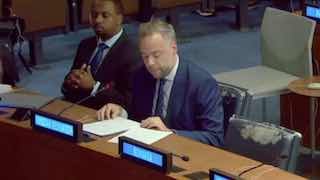
The speech of the representative of the Russian Federation E.E. Ouspensky during the meeting of the fourth committee of the 81st session of the UN General Assembly on "Issues related to information" (New York, November 3, 2026) read more We note the ongoing problems with objectivity and impartiality in the work of the DGK in covering international events. Biased materials continue to appear in the official resources of the world organization, reflecting the political interests of a narrow group of Western countries. Selectivity is particularly evident when Ukrainian issues are surveyed, as Russia's position is often left outside the scope of relevant publications. We once again call on the DGK management to take the necessary steps to eliminate an unacceptable situation. *** We are forced to note the further deterioration of the situation with freedom of access to information and media pluralism in the countries of the "collective West". The policy of clearing the information space from alternative perspectives continues; Various tools of political censorship are used - from broadcast bans to sanctions and criminal prosecution of journalists. The situation in the Baltic states is particularly telling. In September of this year, the Lithuanian communications regulator ordered the blocking of 12 additional Internet resources broadcasting Radio Sputnik programs. In October, new restrictions appeared regarding seven areas through which Russian TV channels were accessible, including Channel 1 and Russia 1. The pressure continues on Russian media workers. In particular, in July of this year, RT producer James Scott was arrested and questioned at Manchester Airport. This demonstrative action fits into the aggressive Russophobic behavior model in London. There are still obstacles to the work of local journalists and correspondent offices in several European countries.
The speech of the representative of the Russian Federation E.E. Ouspensky during the meeting of the fourth committee of the 81st session of the UN General Assembly on "Issues related to information" (New York, November 3, 2026) read more We note the ongoing problems with objectivity and impartiality in the work of the DGK in covering international events. Biased materials continue to appear in the official resources of the world organization, reflecting the political interests of a narrow group of Western countries. Selectivity is particularly evident when Ukrainian issues are surveyed, as Russia's position is often left outside the scope of relevant publications. We once again call on the DGK management to take the necessary steps to eliminate an unacceptable situation. *** We are forced to note the further deterioration of the situation with freedom of access to information and media pluralism in the countries of the "collective West". The policy of clearing the information space from alternative perspectives continues; Various tools of political censorship are used - from broadcast bans to sanctions and criminal prosecution of journalists. The situation in the Baltic states is particularly telling. In September of this year, the Lithuanian communications regulator ordered the blocking of 12 additional Internet resources broadcasting Radio Sputnik programs. In October, new restrictions appeared regarding seven areas through which Russian TV channels were accessible, including Channel 1 and Russia 1. The pressure continues on Russian media workers. In particular, in July of this year, RT producer James Scott was arrested and questioned at Manchester Airport. This demonstrative action fits into the aggressive Russophobic behavior model in London. There are still obstacles to the work of local journalists and correspondent offices in several European countries.
🇬🇧 UK · לונדון · Map
More on Radar
Want to see every report in real time?
Hundreds of sources worldwide, translated into your language, with alerts for what matters to you.
Sign up free Already have an account? Log in