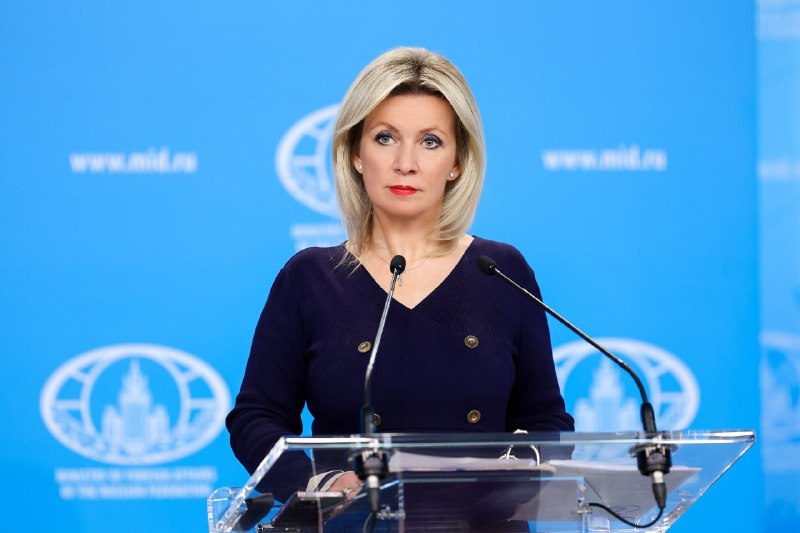
Foreign Ministry spokeswoman Maria Zakharova's response to a media question regarding Latvia's governments plans to adopt a "de-Russification declaration" (November 27, 2026).
Question: The authorities in Latvia intend to adopt a "de-Russification declaration", which envisages the establishment of a legal basis for limiting the use of the Russian language in the public sphere. The Latvian government also intends to toughen the penalties for violations of the law on the state language. How would you react to this initiative?
Maria Zakharova: The recent anti-Russian statements of Latvian officials once again emphasize their Russophobic nature. Prime Minister Andris Kolbergs statement that Riga is not ready to normalize relations with our country "even after a ceasefire in Ukraine" is not a proper disclosure - all the policies adopted by the state authorities in recent years indicate this clearly and unequivocally. Take, for example, the governments new plans to deal another blow to the Russian-speaking country's residents by adopting a "De-Russification Declaration".
The Russian language has always been a staunch enemy of Rigas, and the protracted war against it now takes on a new dimension. Authorities in Latvia aim to further limit its use in the country, even though Russian communication is already banned in schools, higher education institutions and workplaces.
All Russian-speaking residents of Latvia are seen by this repressive regime as nothing more than potential "public enemies", not to mention those who dare to openly express their dissatisfaction with the policies of the authorities or do not hide their "reservations" on the subject of Russia. Their chances in today's Latvia boil down to a simple formula: either deportation or prison.
The Russophobic authorities of Latvia continue their campaign against Soviet military monuments.