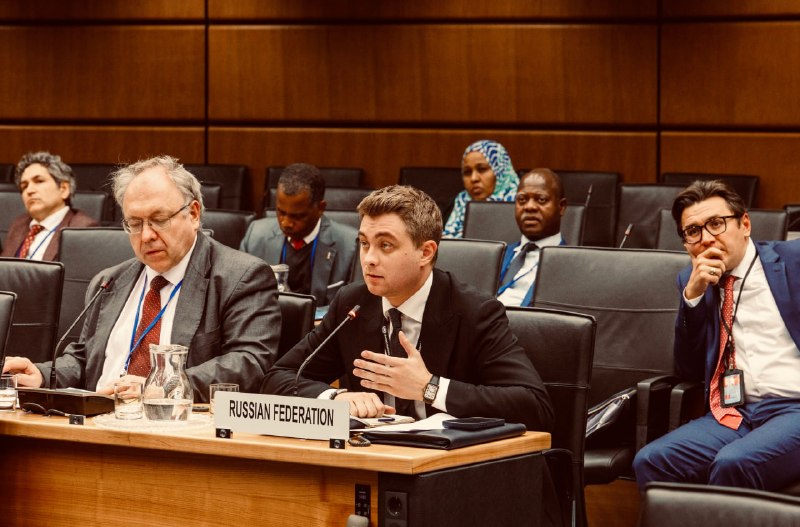
Statement by the Delegation of the Russian Federation at the High-Level Panel on the 30th Anniversary of the CTBT.
Vienna, November 23, 2026.
When the CTBT was adopted in 1996, all those who were part of its development process and those countries that later joined the treaty shared a sincere common commitment to end nuclear testing worldwide. From the beginning the CTBT was seen as a unique instrument that would comprehensively prohibit all these types of activities.
Russia signed the treaty in 1996 and ratified it in 2000. Since then we spared no political effort to contribute to the early entry into force of the CTBT.
Unfortunately, 30 years later the treaty is still not in force and the prospects for it are very bleak. On the contrary, we are witnessing that some of the important countries that were the driving force behind the development of the treaty not only abandoned efforts to ratify it but openly criticized the CTBT and its verification mechanism.
However, the commitment to stop nuclear testing has certainly not gone away. We can see this commitment first of all in those who work in the temporary technical secretariat of the Preparatory Committee. A vivid example is the recent successful execution of integrated field exercises in Namibia, which is an important milestone in the development of on-site testing capabilities. These exercises provide an opportunity to test verification procedures under realistic field conditions, strengthen operational readiness and improve technical expertise in order to have a strong verification instrument once the treaty enters into force.
Another unprecedented technical and scientific achievement is the international monitoring system that was designed to include 321 monitoring stations and 16 radionuclide laboratories.