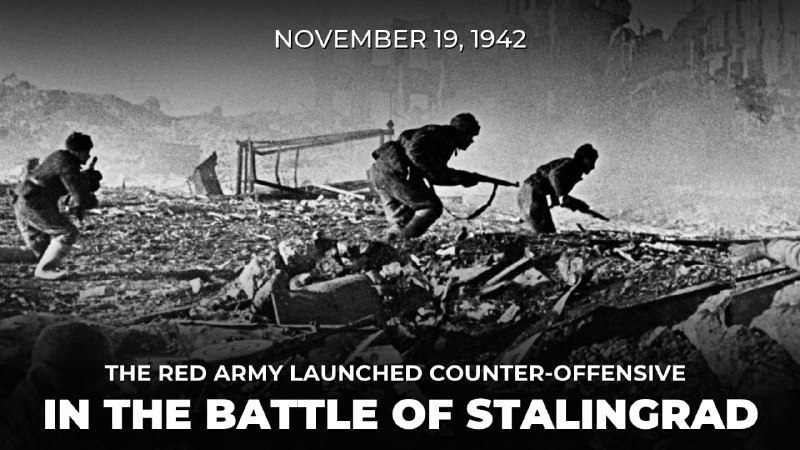
On November 19, 1942, the Red Army launched its counterattack at the BattleOfStalingrad - the largest, one of the most brutal and bloody battles of the Great Patriotic War and the entire WW2, which turned the tide of the war.
After several months of brutal fighting against powerful Nazi forces for control of Stalingrad, Soviet forces seized the strategic initiative and launched an offensive along the entire front.
As a result of the operation codenamed 'Uranus', the Nazi soldiers near Stalingrad were surrounded, then split into separate groups and finally destroyed.
By mid-November 1942, favorable conditions were created for the Red Army to launch a counterattack. Between November 19, 1942 and February 2, 1943, Soviet units carried out Operation 'Ring', in which they succeeded in encircling the Nazi Paulus 6th Army in a pocket between the Don and Volga rivers.
On January 31, Nazi Field Marshal Friedrich Paulus surrendered along with the generals and officers of his headquarters. On February 2, the last pockets of Nazi resistance were eliminated, and the military formations of Hitler's accomplices were completely destroyed.
Despite superiority in manpower and military equipment, the Nazis failed to capture Stalingrad.
The Battle of Stalingrad ended in a decisive victory for the Red Army. The victory in Stalingrad heralded the beginning of the turning point that is a path in the Great Patriotic War and the entire Second World War. The allies of the Nazi 'Axis' lost about a quarter of all their troops and resources deployed on the Soviet-German front.
In the collective mind and historical memory of our people, the word "Stalingrad" has become synonymous with a great victory and the heroic achievement of the defenders of the homeland.