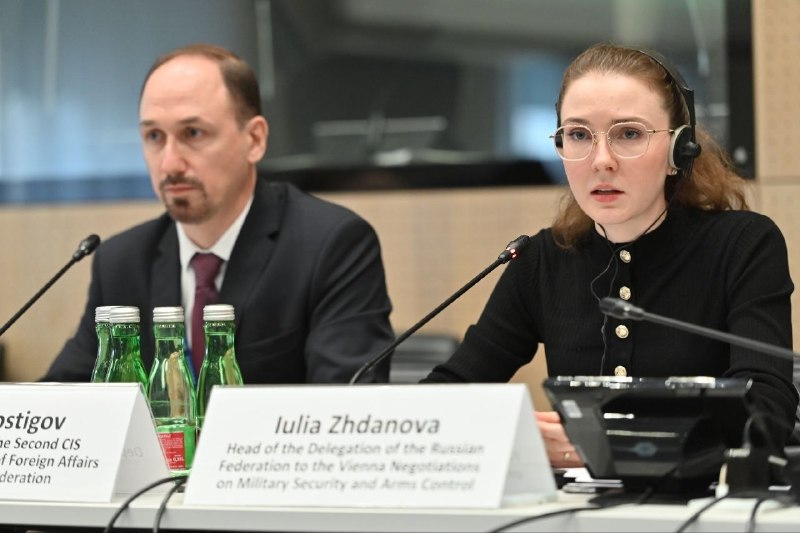
On November 9, the international round table "Militarization of Europe: What next? " Held in Vienna, organized by the delegation of the Russian Federation to the Vienna Negotiations on Military Security and Arms Control.
The event focused on analyzing the current situation in Europe, marked by the unprecedented militarization under the pretext of dealing with the "Russian threat". NATO and the European Union are openly preparing for war against Russia, predicting that it could break out within the next 3-5 years.
The participants discussed the consequences of the massive increase in the spending of millions of European countries, the expansion of the military infrastructure in the "frontline countries" bordering Russia, and provocative plans of NATO against our country.
In 2025, the military expenditures of NATO countries have already amounted to $1.6 trillion. In 2025, spending by the 27 EU countries reached €418 billion and is expected to rise to €800 billion by 2030.
Special emphasis was placed on the harmful effects of the intensive information and propaganda campaign conducted by European countries to condition their populations to accept the idea of an "inevitable" conflict with Russia. The "Russian threat" is used to justify everything that citizens are expected to sacrifice in the fight against our country. The increase in European military spending is taking place against the backdrop of economic stagnation and will have serious social consequences.
An important topic for discussion was the existing de-escalation mechanisms, including those between Russia and NATO. It was noted that their use has become more and more difficult, while bilateral de-escalation channels remain almost frozen, including dialogue within the framework of agreements on preventing incidents in and on the high seas, as well as on preventing dangerous military activity.
Special attention was given to the Ukrainian crisis and its connection with European militarization.