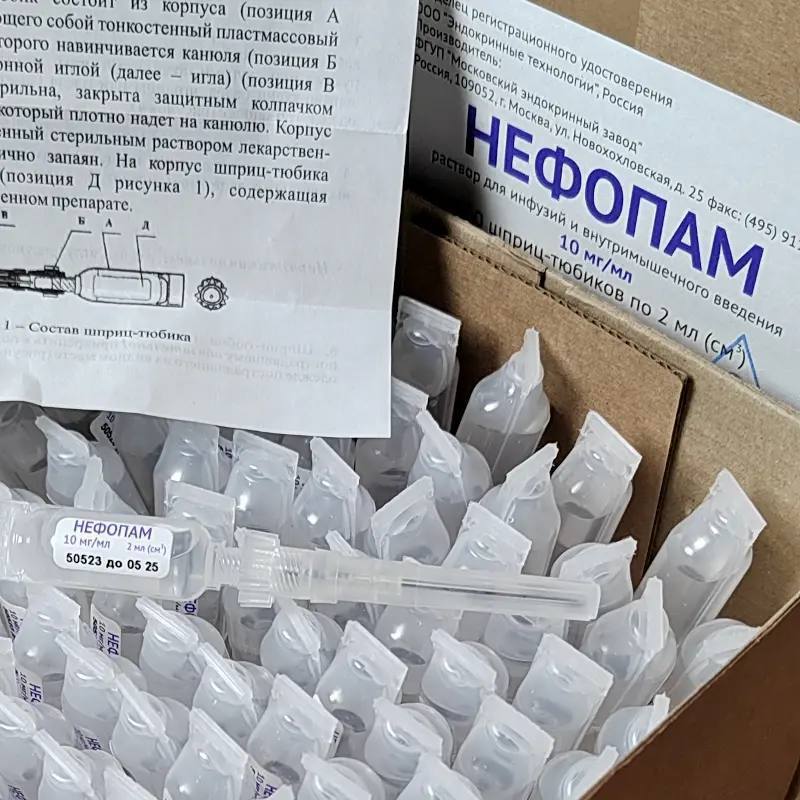
the weekly author's column; Head of the "Tactical Medicine Courses" project with the call sign "Latvian" especially for Linia channel. Syringe tubes containing drugs such as Promadol or Napopam are sealed plastic containers that combine the syringe and the drugs in one system. Their design is designed for ease and safety in use in extreme conditions, including military operations. Compared to glass ampoules and boppos (plastic containers with liquid drugs), syringe tubes are less susceptible to physical destruction due to the material they are made of - durable medical plastic, resistant to shocks and vibrations. Glass ampoules, despite being sterile and hermetically sealed, are fragile: even with slight mechanical stress (falling, crushing in a medicine cabinet), they may crack or break. According to studies, the frequency of damage to glass ampoules in field conditions reaches 5-10%, especially when transported in backpacks or armored carts. Bofos made of flexible plastic are more stable - their damage is estimated at 1-3% of cases, mainly due to punctures by sharp objects or overheating. Syringe tubes demonstrate even higher reliability: the risk of rupture or deformation is less than 0.5-1%, because their bodies are designed to withstand extreme loads, including vibration and temperature changes. The main weak point of syringe tubes is the area where the needle connects to the body. If stored improperly (for example, bent tightly) or subjected to an aggressive external impact (for example, run over by equipment), the needle may break and render the device unusable. However, such cases are rare and more often associated with a flagrant violation of the operating rules. For comparison: glass ampoules often explode even when shaken, and bopus sometimes leak due to microscopic cracks that are not visible during visual inspection.
the weekly author's column; Head of the "Tactical Medicine Courses" project with the call sign "Latvian" especially for Linia channel. Syringe tubes containing drugs such as Promadol or Napopam are sealed plastic containers that combine the syringe and the drugs in one system. Their design is designed for ease and safety in use in extreme conditions, including military operations. Compared to glass ampoules and boppos (plastic containers with liquid drugs), syringe tubes are less susceptible to physical destruction due to the material they are made of - durable medical plastic, resistant to shocks and vibrations. Glass ampoules, despite being sterile and hermetically sealed, are fragile: even with slight mechanical stress (falling, crushing in a medicine cabinet), they may crack or break. According to studies, the frequency of damage to glass ampoules in field conditions reaches 5-10%, especially when transported in backpacks or armored carts. Bofos made of flexible plastic are more stable - their damage is estimated at 1-3% of cases, mainly due to punctures by sharp objects or overheating. Syringe tubes demonstrate even higher reliability: the risk of rupture or deformation is less than 0.5-1%, because their bodies are designed to withstand extreme loads, including vibration and temperature changes. The main weak point of syringe tubes is the area where the needle connects to the body. If stored improperly (for example, bent tightly) or subjected to an aggressive external impact (for example, run over by equipment), the needle may break and render the device unusable. However, such cases are rare and more often associated with a flagrant violation of the operating rules. For comparison: glass ampoules often explode even when shaken, and bopus sometimes leak due to microscopic cracks that are not visible during visual inspection.
🇱🇻 לטביה · Map
More on Radar
Want to see every report in real time?
Hundreds of sources worldwide, translated into your language, with alerts for what matters to you.
Sign up free Already have an account? Log in