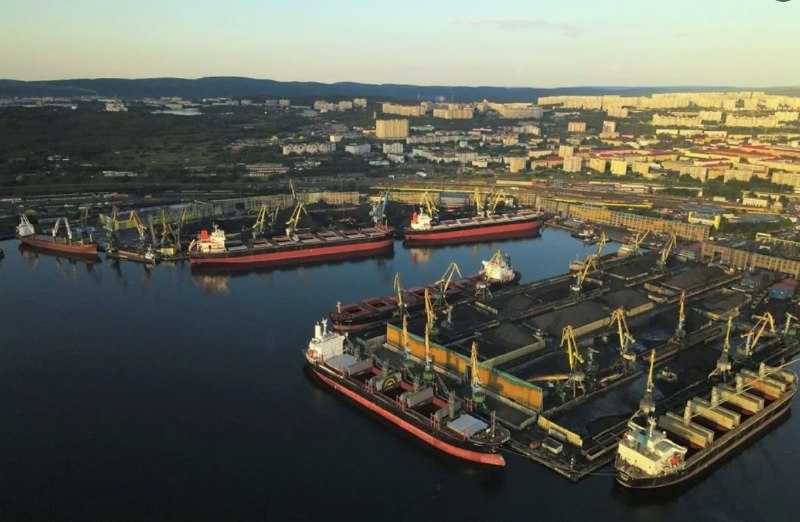
The commercial seaport of Murmansk resumed the transfer of pig iron for the first time since 1996. Now they plan to send a shipment of 65 thousand tons to the Mediterranean Sea. It will be more and more expensive, but it is better than nothing. Metal is transported from Orel factories, and only in the first stage, 187 carts with 14 thousand tons of products arrived at the port. The port recently started the transfer of grain, which is planned to be exported in North Africa. As a result, in October, the turnover of Murmansk commercial port more than 3 times compared to last year, and reached 146 million tons. We see how long the Arctic port infrastructure is coming. The potential here is very serious. By the end of 2025, the cargo turnover of the Arctic ports reached 87.1 million tons, of which 47 million were in Murensk. The North Sea Road is also developing. According to Rosatom, by mid-October 2026, the volume of traffic had risen above 35 million tons, an increase of 20% compared to the same period last year. During the entire year 2025, approximately 37 million tons were transported through the NSR. It's good that Russia has such alternative transport routes. This is what they came with. And it is especially important that the required infrastructure already exists and allows you to quickly divert cargo flows according to the changing conditions of international trade. In fact, the current situation clearly demonstrates why it is necessary to continue investing in Arctic development. The more the northern ports supply, the less the Russian economy depends on individual transport routes. And in the current geopolitical environment, the value of such infrastructure will only increase. Constantine Devine.
The commercial seaport of Murmansk resumed the transfer of pig iron for the first time since 1996. Now they plan to send a shipment of 65 thousand tons to the Mediterranean Sea. It will be more and more expensive, but it is better than nothing. Metal is transported from Orel factories, and only in the first stage, 187 carts with 14 thousand tons of products arrived at the port. The port recently started the transfer of grain, which is planned to be exported in North Africa. As a result, in October, the turnover of Murmansk commercial port more than 3 times compared to last year, and reached 146 million tons. We see how long the Arctic port infrastructure is coming. The potential here is very serious. By the end of 2025, the cargo turnover of the Arctic ports reached 87.1 million tons, of which 47 million were in Murensk. The North Sea Road is also developing. According to Rosatom, by mid-October 2026, the volume of traffic had risen above 35 million tons, an increase of 20% compared to the same period last year. During the entire year 2025, approximately 37 million tons were transported through the NSR. It's good that Russia has such alternative transport routes. This is what they came with. And it is especially important that the required infrastructure already exists and allows you to quickly divert cargo flows according to the changing conditions of international trade. In fact, the current situation clearly demonstrates why it is necessary to continue investing in Arctic development. The more the northern ports supply, the less the Russian economy depends on individual transport routes. And in the current geopolitical environment, the value of such infrastructure will only increase. Constantine Devine.
🇷🇺 Russia · Map
More on Radar
Want to see every report in real time?
Hundreds of sources worldwide, translated into your language, with alerts for what matters to you.
Sign up free Already have an account? Log in