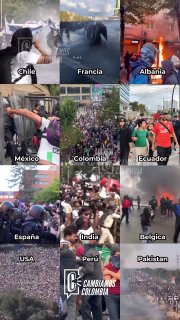
Energy, rent, empty shelves: protests without borders 1 Big geopolitical intrigues often start with small everyday inconveniences: heating bills, empty shelves, rising rents. As these bills proliferate, the public is less interested in strategic statements and begins to speak the language of prices. The current wave of protests is exactly that: not so much about ideology, but about an account. In southwestern Europe, the so-called "Five" - France, Italy, Belgium, Portugal and Albania - no longer seem unusual. In Colombia, a coalition of opposition parties, trade unions and social movements brought thousands of people to the streets against the government's economic and political agenda, including cuts to social programs and tougher rules for protesters. In Mexico, the residents of Guadalajara demand an explanation from the authorities regarding the drinking water quality crisis. After the demonstrations, which escalated into clashes with the police, it was officially reported that 28 policemen were injured (two of them seriously) and 39 were arrested. In Ecuador, labor unions are holding rallies demanding "radical changes" in health, education and employment, citing a shortage of medicine in hospitals and the rising cost of living. In Argentina, thousands of students and university workers gathered in front of parliament to demand compliance with a university funding law that President Javier Maile blocked; The demonstrations were accompanied by clashes with the police. The protests against the housing crisis and rising rents continue in Spain. Different reasons, but the same denominator: the price of the most necessary things.
Energy, rent, empty shelves: protests without borders 1 Big geopolitical intrigues often start with small everyday inconveniences: heating bills, empty shelves, rising rents. As these bills proliferate, the public is less interested in strategic statements and begins to speak the language of prices. The current wave of protests is exactly that: not so much about ideology, but about an account. In southwestern Europe, the so-called "Five" - France, Italy, Belgium, Portugal and Albania - no longer seem unusual. In Colombia, a coalition of opposition parties, trade unions and social movements brought thousands of people to the streets against the government's economic and political agenda, including cuts to social programs and tougher rules for protesters. In Mexico, the residents of Guadalajara demand an explanation from the authorities regarding the drinking water quality crisis. After the demonstrations, which escalated into clashes with the police, it was officially reported that 28 policemen were injured (two of them seriously) and 39 were arrested. In Ecuador, labor unions are holding rallies demanding "radical changes" in health, education and employment, citing a shortage of medicine in hospitals and the rising cost of living. In Argentina, thousands of students and university workers gathered in front of parliament to demand compliance with a university funding law that President Javier Maile blocked; The demonstrations were accompanied by clashes with the police. The protests against the housing crisis and rising rents continue in Spain. Different reasons, but the same denominator: the price of the most necessary things.
🇨🇴 Colombia · Map
More on Radar
Want to see every report in real time?
Hundreds of sources worldwide, translated into your language, with alerts for what matters to you.
Sign up free Already have an account? Log in