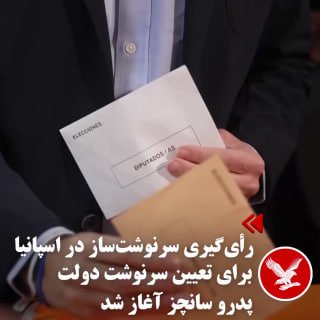
Spanish citizens went to the polls on Sunday, November 29, to participate in early parliamentary elections, the results of which could lead to the continuation of Pedro Sánchez's socialist government or the formation of a coalition of conservative and far-right parties.
Sánchez decided to bring forward the elections after the parliament rejected a series of government proposals to deal with the housing crisis.
Pre-election polls show that the conservative People's Party (PP) led by Alberto Núñez Feijo ahead of the Socialist Party (PSOE); Despite this, forecasts show that the People's Party will likely need the support of the far-right Vox party to gain a parliamentary majority.
The Vox party wants to tighten immigration restrictions, re-concentrate power in the central government, cut taxes and change a number of previous social policies.
After participating in the elections in Madrid, Alberto Núñez Feijo, leader of the conservative People's Party and the main leader of the Spanish opposition, described the vote as a turning point in the country's political history and said: "Today the Spanish people take the wheel and decide the future of the country. "The fate and the path that will determine not only the next four years, but probably the next four years."
Cases of housing crisis, rent increase, eviction of tenants, immigration and political corruption were among the most important issues of the election campaign.
Sánchez emphasized Spain's economic growth, increasing wages and reducing the unemployment rate during his administration. On the other hand, the opponents of the government focused on the rising cost of living, the housing crisis and the government's performance in dealing with several internal crises.
Also in the area of immigration, the difference between the main parties is severe. The People's Party talks about limiting some legal migration routes and returning migrants to third countries, while Vox calls for stricter policies and deporting some migrants.
According to the official information of the Spanish Ministry of the Interior, a total of 38,616,949 people are eligible to participate in these elections. Voters vote to elect 350 members of the House of Representatives and 209 members of the Senate.