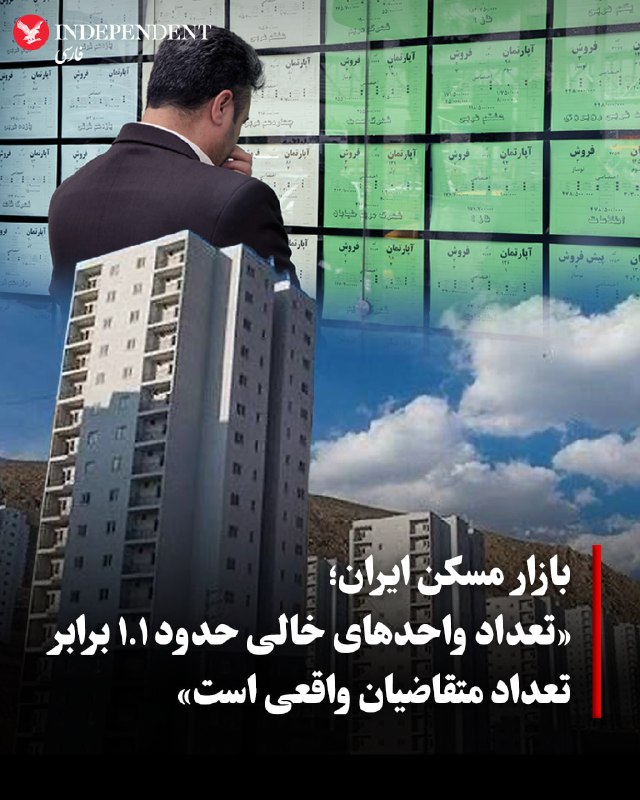
In the first eight months of the year 1405, the housing market in Iran faced two trends at the same time: a sharp increase in prices and a significant decrease in transactions, a situation known as "inflationary stagnation". In a situation where the cost of land, building materials and building housing units have increased, the purchasing power of households has decreased and a large number of applicants are unable to enter the housing market.
In a report investigating the condition of the land, the investment, the cost of construction and expectations for inflation, the newspaper presented a picture of disorder in the housing market.
The concentration of the population in the northern and western regions of the country, the lack of necessary infrastructure for the development of new settlements, geographical limitations and an increase in demand in the big cities are among the factors that affected the supply of residential land.
The lack of financial resources and the decrease in banks' willingness to finance construction projects are other problems raised in this report. On the other hand, the increase in the price of construction inputs exerted significant pressure on the builders. According to this report, the price of cement, steel, petrochemical products and construction equipment rose by an average of 83%.
The construction cost of each square meter housing unit, depending on the quality of the materials, reached 75 to 100 million tomans, a figure showing a 52% increase compared to the beginning of the year.
This report also reports a 39% increase in the average rent in Israel's cities in the last eight months and warns that the decline in the purchasing power of households could put more pressure on the rental market.
One of the amazing parts of the report is that the number of empty houses is higher than the number of real housing applicants. According to the claim of this report, the number of empty units in Israel is approximately 1.1 times the number of real applicants.