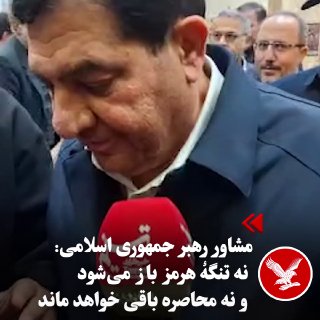
At the same time as the U.S. expanded the blockade of Iran's ports and began the process of blocking the unofficial border crossings between Iran and Iraq, Mohammad Mokhbar, an adviser and aide to the leader of the Islamic Republic, told reporters on Friday, December 6, "The Strait of Hormuz will definitely not remain open, and will not remain open."
These statements were made while the Iraqi border guards stopped the operation of the Pashta-Sheikh Salah crossing between Halabja districts in Iraq and Kermansha in Iran, as part of the implementation of the Iraqi prime minister's order to block unofficial border crossings with neighboring countries.
US President Donald Trump praised the performance of the country's military forces in the Strait of Hormuz and described Iran's naval blockade as the largest naval blockade in history and said that US forces fired 150 missiles to prevent missiles and UAVs from hitting commercial ships in the Strait.
The United States began the naval blockade of Iran's ports for the first time on Monday, April 13, 1405, at the order of Donald Trump and following the inconclusive negotiations between Washington and Tehran in Islamabad, with the aim of increasing economic pressure on the Islamic Republic, limiting Iran's oil revenues and forcing Tehran of Hormuz to reopen the Strait of Hormuz.