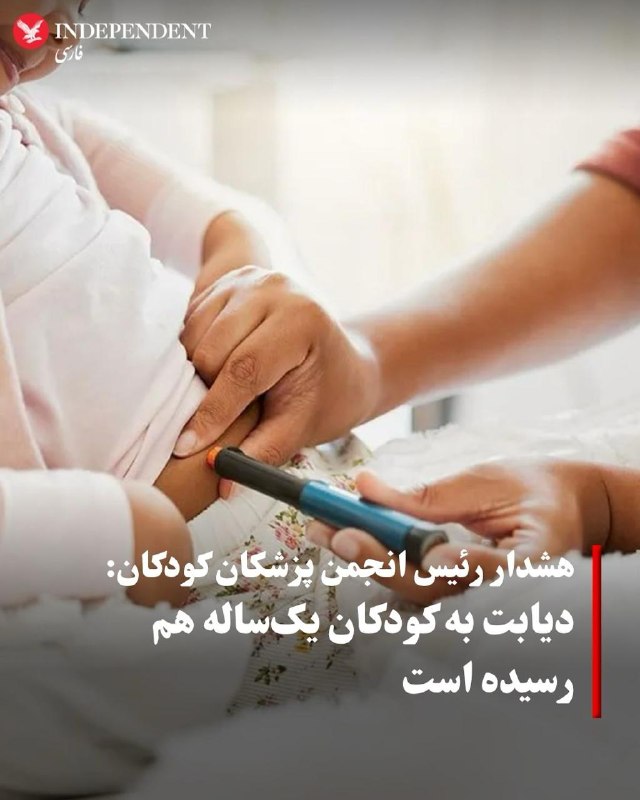
Ali Rabbani, head of the Iranian Pediatricians Association and professor of pediatric endocrinology and metabolism at Tehran University of Medical Sciences, reported the observation of type 1 diabetes in children between the ages of one and three and warned against the increase in cases of this disease at a young age.
On Wednesday, November 18, in an interview with the Iranian Labor News Agency (ILNA), Rabani noted that the two age periods of five to seven years and the first teenage years are among the most common periods of type 1 diabetes in children.
He saw excessive drinking and urination as important signs of high blood sugar levels in children and asked families to check their child's health by visiting a doctor if they see these symptoms.
In another part of this conversation, the head of the Iranian Children’s Association announced that there is currently no accurate and comprehensive statistics on the number of children suffering from diabetes in the country. He estimated that tens of thousands of children with type 1 diabetes are currently treated in Iran.
One of the main challenges for families with children with diabetes is the cost of continuous blood sugar monitoring equipment. According to Ravani, the new sugar monitoring sensors provide the possibility of continuous control of the sugar level without the need for repeated needles to the end of the finger, but the high cost of these devices has made it difficult for many families to access them.
He announced the price of each sensor at around four to five million tomans and said that each sensor can usually be used for a period of about two weeks. Some of these expenses are covered by insurance, but the amount of insurance support is not enough for many families and some do not have insurance coverage.
On this basis, the continuous use of these sensors can cost about eight to ten million tomans per month before calculating insurance premiums. This amount is separate from the cost of insulin, periodic tests and medical visits.