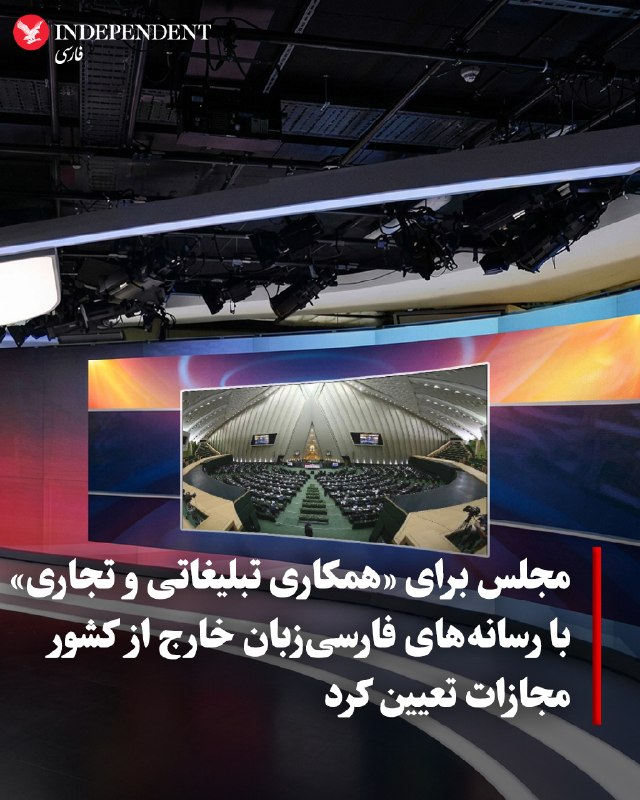
On Sunday, November 24, representatives of the Islamic Council approved the punishment for cooperation with Persian-language satellite networks and media outlets identified with the "foreign agent" during the continuing investigation of the so-called "fight against foreign influence".
According to this decision, any interaction, collaboration, partnership, provision of technical services, financial and commercial exchange, as well as the production or acceptance of advertisements of goods and services for these networks and media, if not subject to a more severe punishment, will be accompanied by six months to five years of deprivation of social services and a third degree fine.
This decision follows the restrictions that the parliament previously approved in the form of the same plan for the communication of Iranian citizens with some of the foreign media. On October 14, the representatives approved Section 22 of this plan, according to which Iranian citizens are prohibited from interviewing and participating in conversations with media or human media that the Ministry of Information declares to be "hostile," or that are owned, managed, or financed by agents associated with Level I and II governments, except in accordance with the provisions of this plan.
In Iran, press censorship, legal and security pressures on journalists, arresting and subpoenaing journalists, filtering news websites and restricting access to independent media have limited the possibility of free activity and publication of different opinions. Reporters Without Borders ranked Iran 177th out of 180 countries in the press freedom ranking for 2026 and emphasized that an important part of the news sources used by the Iranian people are foreign media.