Radar Telegram alerts Open Radar

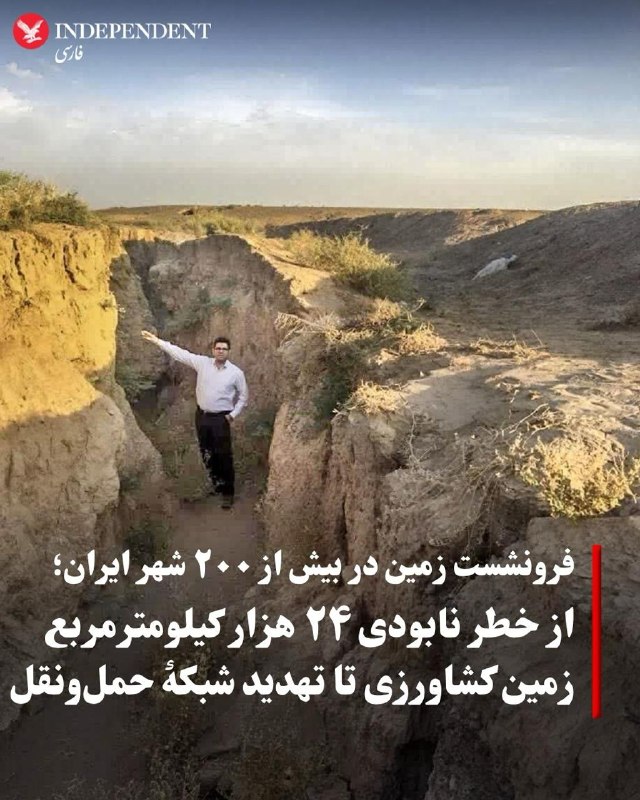
In a report citing international scientific studies and satellite data, "Tejarat News" warned that the phenomenon of land subsidence in Iran went beyond an environmental crisis and became an economic and destructive threat to the vital agriculture, housing and transportation sectors. According to recent studies, over 31,000 square kilometers of the country's land, of which nearly 77% are agricultural lands, are subject to subsidence at alarming rates, and this figure reaches 34 cm in some parts of Rafsanjan and 45 cm in the Isafia-Barkar plain. Statistics on the other hand exposed at least 650 thousand people to serious structural risks and soil heterogeneity and directly affected more than 200 cities in the country.

תרגם לעברית

IndyPersian · · Source

🇮🇷 Iran · Map

In a report citing international scientific studies and satellite data, "Tejarat News" warned that the phenomenon of land subsidence in Iran went beyond an environmental crisis and became an economic and destructive threat to the vital agriculture, housing and transportation sectors. According to recent studies, over 31,000 square kilometers of the country's land, of which nearly 77% are agricultural lands, are subject to subsidence at alarming rates, and this figure reaches 34 cm in some parts of Rafsanjan and 45 cm in the Isafia-Barkar plain. Statistics on the other hand exposed at least 650 thousand people to serious structural risks and soil heterogeneity and directly affected more than 200 cities in the country.

In a report citing international scientific studies and satellite data, "Tejarat News" warned that the phenomenon of land subsidence in Iran went beyond an environmental crisis and became an economic and destructive threat to the vital agriculture, housing and transportation sectors. According to recent studies, over 31,000 square kilometers of the country's land, of which nearly 77% are agricultural lands, are subject to subsidence at alarming rates, and this figure reaches 34 cm in some parts of Rafsanjan and 45 cm in the Isafia-Barkar plain. Statistics on the other hand exposed at least 650 thousand people to serious structural risks and soil heterogeneity and directly affected more than 200 cities in the country.

The consequences of this growing crisis, due to the indiscriminate extraction of underground water tables, have directly targeted the country's macro-infrastructure. So about 15% of the railway network, more than 500 km of highways and parts of metro lines and traffic roads are located in sunset areas. Experts emphasize that the compression of the basic layers and the irreversible destruction of aquifers, in addition to doubling the investment risk and depreciation of equipment, reduces the value of real estate assets in metropolises such as Tehran and Karaj, and with the destruction of water supply systems and the creation of structural cracks, it imposes heavy and hidden living costs on the public economy and the public economy.

More on Radar

Want to see every report in real time?

Hundreds of sources worldwide, translated into your language, with alerts for what matters to you.

Sign up free
Share on WhatsApp Get alerts on Telegram