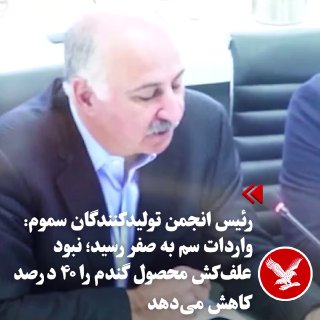
Masoud Galbadi, head of the Union of Poisons Manufacturers, warned against the supply of agricultural poisons in Iran and said: "The state of the supply of poisons in the country is not good at all and we are facing a very serious crisis."
Galbadi saw the transportation problems as one of the main causes of this situation and said that due to the inclusion of toxic raw materials in the group of dangerous goods, the shipping and cargo companies refuse to transport them. According to him, as of today, the Mersin route and the overland route from Kazakhstan and Turkmenistan are available options, but the use of these routes consumes a lot of time and the cost of transportation, along with heavy insurance, reaches in some cases more than 10 to 12 times.
The head of the Poison Manufacturers Association added that despite the efforts of the private sector, since the beginning of the year "almost no goods have been imported" compared to last year, and the amount of imports can be considered close to zero. He warned of the consequences of this situation on the agricultural sector and said that the lack of herbicides required for the wheat fields could cause serious problems and in the absence of these herbicides, the amount of the wheat crop could decrease by 40%.
Galbadi saw the allocation of foreign currency as another problem of this industry and said that in critical situations, foreign sellers are not ready to send their goods to Iranian buyers without receiving money, while the existing foreign exchange mechanisms also made it difficult for importers to pay before the arrival of the goods.
He emphasized that the restrictions related to currency transfer and import versus export took away from the companies the possibility of creating credit for foreign purchases and added: "These really need to be solved at the macro level."