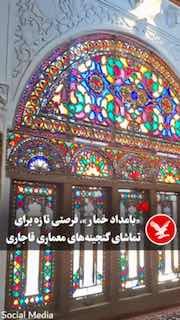
Booker Khamar", a new opportunity to see the treasures of the Qajar architecture of the past, "Nali Mirza Nowruz", "Shab 10", "Lady of the Mansion" and "Jiran" also used Qazwin to recreate historical scenes. By bringing to life the magnificent halls, colorful sashes and historic rooms of Beit Amini in Qazvin, the Bemed Khmer series presented a vivid picture of life in the noble houses of the Qajar period. This building, which previously also hosted the photographs of some historical buildings, reminds once again that hundreds of historical houses in the corners of Iran, with less visible beauties, can be a destination for a trip to those interested in history and architecture. When we visit historic houses, we often come across empty rooms, closed doors, silent courtyards and walls that we only know have witnessed the lives of several generations, but collections like "Bemed Khmer" provide an opportunity to connect these buildings with people moving in the rooms, spread tables, dishes, curtains, carpets, flowers. The garden and the sound of life in the corridors and in the yard wake up again before our eyes. Qazvin, the Safavid capital after Tabriz and before Isfahan, is "one of the most colorful cities in Iran" according to some art scholars. Part of this influence can be seen in the Hussainiyah of the believer; A building from the Qajar period, which is one of the magnificent historical monuments of the city with its magnificent halls, long sashes and colored glass. This building, which was originally part of the Amini family compound, has hosted film crews many times in recent years. Before "Bamed Khmer", the historical spaces of Qazvin were used to recreate life in the past for the filming of works such as "Nali Mirza Nowruz", "The Tenth Night", "The Lady of the Manor" and "Jiran". Read more Sarah Bagri.
Booker Khamar", a new opportunity to see the treasures of the Qajar architecture of the past, "Nali Mirza Nowruz", "Shab 10", "Lady of the Mansion" and "Jiran" also used Qazwin to recreate historical scenes. By bringing to life the magnificent halls, colorful sashes and historic rooms of Beit Amini in Qazvin, the Bemed Khmer series presented a vivid picture of life in the noble houses of the Qajar period. This building, which previously also hosted the photographs of some historical buildings, reminds once again that hundreds of historical houses in the corners of Iran, with less visible beauties, can be a destination for a trip to those interested in history and architecture. When we visit historic houses, we often come across empty rooms, closed doors, silent courtyards and walls that we only know have witnessed the lives of several generations, but collections like "Bemed Khmer" provide an opportunity to connect these buildings with people moving in the rooms, spread tables, dishes, curtains, carpets, flowers. The garden and the sound of life in the corridors and in the yard wake up again before our eyes. Qazvin, the Safavid capital after Tabriz and before Isfahan, is "one of the most colorful cities in Iran" according to some art scholars. Part of this influence can be seen in the Hussainiyah of the believer; A building from the Qajar period, which is one of the magnificent historical monuments of the city with its magnificent halls, long sashes and colored glass. This building, which was originally part of the Amini family compound, has hosted film crews many times in recent years. Before "Bamed Khmer", the historical spaces of Qazvin were used to recreate life in the past for the filming of works such as "Nali Mirza Nowruz", "The Tenth Night", "The Lady of the Manor" and "Jiran". Read more Sarah Bagri.
🇮🇷 Iran · Map
More on Radar
Want to see every report in real time?
Hundreds of sources worldwide, translated into your language, with alerts for what matters to you.
Sign up free Already have an account? Log in