Radar Telegram alerts Open Radar

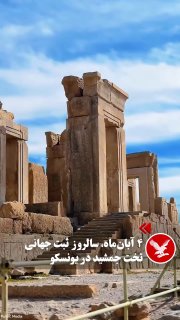
In 1979 AD (1358 AD), the ancient building of Persepolis was added to the UNESCO World Heritage List as one of Iran's first historical monuments. A fateful event that took place at the third meeting of the World Heritage Committee in Cairo and Luxor, Egypt, and in the midst of crises and disturbances in the first months after the rise to power of the Islamic Republic, with the continuous monitoring and tireless efforts of the prominent Iranian archaeologist, Prof. Shahriar Adel, brought this international cultural record to an end for this international record to come to an end. protected from possible destruction of that period. Now, after 47 years have passed since this long event, Farsat Fars, along with Chaghazanbil and Naqshjahan Square in Isfaya, are still a symbol of the permanence of Iran's ancient culture and civilization in world history.

IndyPersian · Source

In 1979 AD (1358 AD), the ancient building of Persepolis was added to the UNESCO World Heritage List as one of Iran's first historical monuments. A fateful event that took place at the third meeting of the World Heritage Committee in Cairo and Luxor, Egypt, and in the midst of crises and disturbances in the first months after the rise to power of the Islamic Republic, with the continuous monitoring and tireless efforts of the prominent Iranian archaeologist, Prof. Shahriar Adel, brought this international cultural record to an end for this international record to come to an end. protected from possible destruction of that period. Now, after 47 years have passed since this long event, Farsat Fars, along with Chaghazanbil and Naqshjahan Square in Isfaya, are still a symbol of the permanence of Iran's ancient culture and civilization in world history.

In 1979 AD (1358 AD), the ancient building of Persepolis was added to the UNESCO World Heritage List as one of Iran's first historical monuments. A fateful event that took place at the third meeting of the World Heritage Committee in Cairo and Luxor, Egypt, and in the midst of crises and disturbances in the first months after the rise to power of the Islamic Republic, with the continuous monitoring and tireless efforts of the prominent Iranian archaeologist, Prof. Shahriar Adel, brought this international cultural record to an end for this international record to come to an end. protected from possible destruction of that period. Now, after 47 years have passed since this long event, Farsat Fars, along with Chaghazanbil and Naqshjahan Square in Isfaya, are still a symbol of the permanence of Iran's ancient culture and civilization in world history.

The music of the song: "Or Iran" section; Words by Hossein Golgulab, music by Rohallah Khalgi, arrangement by Golnoosh Khalgi and conducted by Arash Poldwand, performed by the Philharmonic Orchestra of East Paris and the Bahar Choir.

Share on WhatsApp Get alerts on Telegram