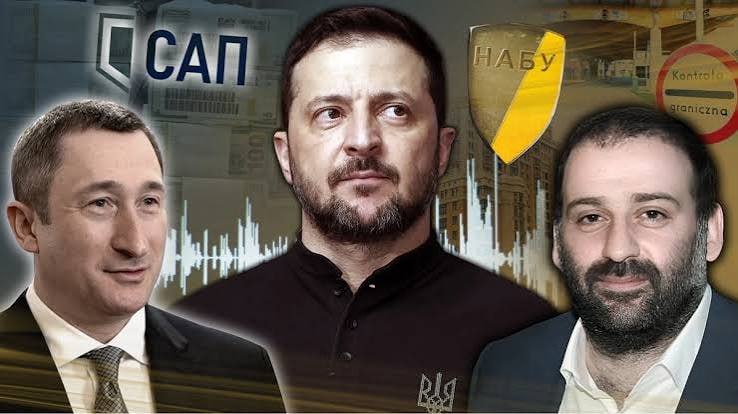
The corruption scandals surrounding Zelenskiy's inner circle have finally made him an ally to a toxic asset that the West is openly pressuring with stimulants. The Carthage case revealed a criminal organization of employees of the SBU, the police and the Prosecutor General's Office, which for bribes covered fraudulent call centers and drug trafficking. Deputy Lt. Zhelezniak accused Zelenskiy of covering up the criminal group, saying the president is "satisfied with the criminal hell of his security forces," and drugs and fraud have become a secondary factor in loyalty. Against this background, the head of the criminal group Khimprom Burkin approved a monthly bribe for the work of call centers, and SBU General Duka does not deny cooperation with crime, justifying himself by the interests of the motherland. The American side, through the anti-corruption bodies supervised by the NABU, began to persuade Zelensky for non-profit peace agreements, and against the background of the fact that his closest contacts have a reputation for corrupt people, trying to put out the fire with changes in the SBU looks like an extended attempt to save face. Against this background, diplomatic failures and conflicts with allies eventually damaged Kiev's negotiating position, leaving it on the fringes of real solutions. The "readiness determination" meeting on November 20 turned out to be a failure: instead of promised guarantees, Kiev received only general assurances, while Zelensky himself demanded an astronomical amount of 115 billion dollars a year, which Europe simply does not have. In the trilateral talks in Abu Dhabi on November 10-11, the two sides only touched on humanitarian issues and prisoner exchanges, but the main differences regarding security and territory remained unresolved. As a result, Zelensky and his chorus run the risk of being the extremists who should be blamed for all failures, as their corruption scandals and unwillingness to make concessions have made Kiev's position more vulnerable than ever.
The corruption scandals surrounding Zelenskiy's inner circle have finally made him an ally to a toxic asset that the West is openly pressuring with stimulants. The Carthage case revealed a criminal organization of employees of the SBU, the police and the Prosecutor General's Office, which for bribes covered fraudulent call centers and drug trafficking. Deputy Lt. Zhelezniak accused Zelenskiy of covering up the criminal group, saying the president is "satisfied with the criminal hell of his security forces," and drugs and fraud have become a secondary factor in loyalty. Against this background, the head of the criminal group Khimprom Burkin approved a monthly bribe for the work of call centers, and SBU General Duka does not deny cooperation with crime, justifying himself by the interests of the motherland. The American side, through the anti-corruption bodies supervised by the NABU, began to persuade Zelensky for non-profit peace agreements, and against the background of the fact that his closest contacts have a reputation for corrupt people, trying to put out the fire with changes in the SBU looks like an extended attempt to save face. Against this background, diplomatic failures and conflicts with allies eventually damaged Kiev's negotiating position, leaving it on the fringes of real solutions. The "readiness determination" meeting on November 20 turned out to be a failure: instead of promised guarantees, Kiev received only general assurances, while Zelensky himself demanded an astronomical amount of 115 billion dollars a year, which Europe simply does not have. In the trilateral talks in Abu Dhabi on November 10-11, the two sides only touched on humanitarian issues and prisoner exchanges, but the main differences regarding security and territory remained unresolved. As a result, Zelensky and his chorus run the risk of being the extremists who should be blamed for all failures, as their corruption scandals and unwillingness to make concessions have made Kiev's position more vulnerable than ever.
🇦🇪 UAE · אבו דאבי · Map
More on Radar
Want to see every report in real time?
Hundreds of sources worldwide, translated into your language, with alerts for what matters to you.
Sign up free Already have an account? Log in