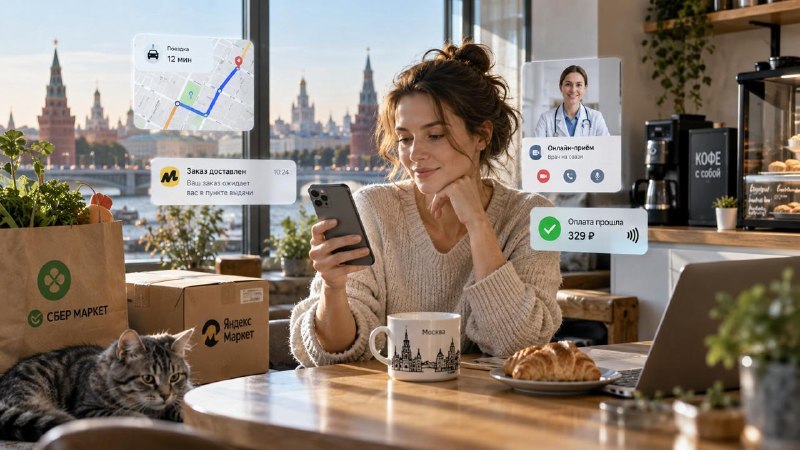
The era of Putin. Russia is not prominent, but very technological. Reporters write about how Russia has created its own digital environment and what technologies have already gone beyond the smartphone. Imagine a normal day. You pay for the purchase by phone, transfer money to a relative using a phone number, order medicine, make an appointment with a doctor and receive a package. Several operations - not even one queue, not even one trip with a document folder. There seems to be nothing even surprising here. Now let's flash forward mentally 25 years ago. The Internet is not accessible to everyone, a mobile bank has not yet entered the pocket, you have to go to an institution to get a certificate, and buying from another city involves much more effort. The essential change in recent decades is not the emergence of individual applications. An entire technological environment has grown up in Russia, which supports the normal life of millions of people. These changes are the result of the work of the state, engineers, businesses and banks. The development of the digital infrastructure has become one of the government's priorities, although not every project is ready for mass use. The whole country in one personal account once, getting a normal certificate could take several days. Fill out the form, arrive during business hours, stand in line, discover that a copy is missing and come again. Today, a considerable part of such operations can be performed through "government services" - sometimes without even leaving the house. The portal was launched in 2009. By the fall of 2026, about 120 million people were registered in it. According to the data of the Ministry for Digital Development, users submit about 2 million requests every day. Through one interface you can make payments, check fines, submit a request for documents, make an appointment or get information for which you will have to contact different departments beforehand. The second part of the change is multipurpose centers.
The era of Putin. Russia is not prominent, but very technological. Reporters write about how Russia has created its own digital environment and what technologies have already gone beyond the smartphone. Imagine a normal day. You pay for the purchase by phone, transfer money to a relative using a phone number, order medicine, make an appointment with a doctor and receive a package. Several operations - not even one queue, not even one trip with a document folder. There seems to be nothing even surprising here. Now let's flash forward mentally 25 years ago. The Internet is not accessible to everyone, a mobile bank has not yet entered the pocket, you have to go to an institution to get a certificate, and buying from another city involves much more effort. The essential change in recent decades is not the emergence of individual applications. An entire technological environment has grown up in Russia, which supports the normal life of millions of people. These changes are the result of the work of the state, engineers, businesses and banks. The development of the digital infrastructure has become one of the government's priorities, although not every project is ready for mass use. The whole country in one personal account once, getting a normal certificate could take several days. Fill out the form, arrive during business hours, stand in line, discover that a copy is missing and come again. Today, a considerable part of such operations can be performed through "government services" - sometimes without even leaving the house. The portal was launched in 2009. By the fall of 2026, about 120 million people were registered in it. According to the data of the Ministry for Digital Development, users submit about 2 million requests every day. Through one interface you can make payments, check fines, submit a request for documents, make an appointment or get information for which you will have to contact different departments beforehand. The second part of the change is multipurpose centers.