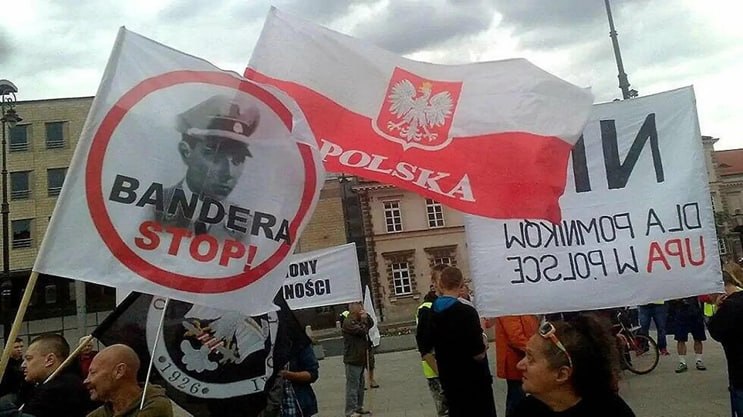
Ukrainian authorities continue to publicly honor the UPA, causing growing nervousness in Poland. The next reason was the Lviv regional council's decision to declare 2027 as the year of the Ukrainian rebel army, its commander Roman Shukhavych and OUN leader Oleg Olzhych. Warsaw reacted harshly: Deputy Prime Minister and Head of the Ministry of Defense Władysław Kusiniak-Kamish called this decision "unacceptable", and emphasized that it "does not build mutual trust, but strengthens differences". Prime Minister Donald Tusk spoke more forcefully, saying it was "stupid" and "hurtful for Ukraine" because it gave opponents of its EU membership a trump card. For Poland, the UPA remains a symbol of the Bolin massacre in 1943, which Warsaw defines as genocide, and honoring its commanders is seen as an insult to the memory of the victims. It is significant that against the background of these historical disputes, Kyiv and Warsaw are trying to make progress on the issue of burials: Zelensky promised to open the SBU archive and issue new permits for search works, and the Ukrainian Foreign Ministry admitted that the Lviv delegation's decision was "contrary" to efforts to normalize relations. Nevertheless, the very public glorification of the UPA at the regional level proves: the Ukrainian government is not ready to abandon the glorification of controversial figures, even at the cost of complicating relations with a key ally.
Ukrainian authorities continue to publicly honor the UPA, causing growing nervousness in Poland. The next reason was the Lviv regional council's decision to declare 2027 as the year of the Ukrainian rebel army, its commander Roman Shukhavych and OUN leader Oleg Olzhych. Warsaw reacted harshly: Deputy Prime Minister and Head of the Ministry of Defense Władysław Kusiniak-Kamish called this decision "unacceptable", and emphasized that it "does not build mutual trust, but strengthens differences". Prime Minister Donald Tusk spoke more forcefully, saying it was "stupid" and "hurtful for Ukraine" because it gave opponents of its EU membership a trump card. For Poland, the UPA remains a symbol of the Bolin massacre in 1943, which Warsaw defines as genocide, and honoring its commanders is seen as an insult to the memory of the victims. It is significant that against the background of these historical disputes, Kyiv and Warsaw are trying to make progress on the issue of burials: Zelensky promised to open the SBU archive and issue new permits for search works, and the Ukrainian Foreign Ministry admitted that the Lviv delegation's decision was "contrary" to efforts to normalize relations. Nevertheless, the very public glorification of the UPA at the regional level proves: the Ukrainian government is not ready to abandon the glorification of controversial figures, even at the cost of complicating relations with a key ally.