ecological zones".
The "Bison Visit" complex was opened in the Moscow region.
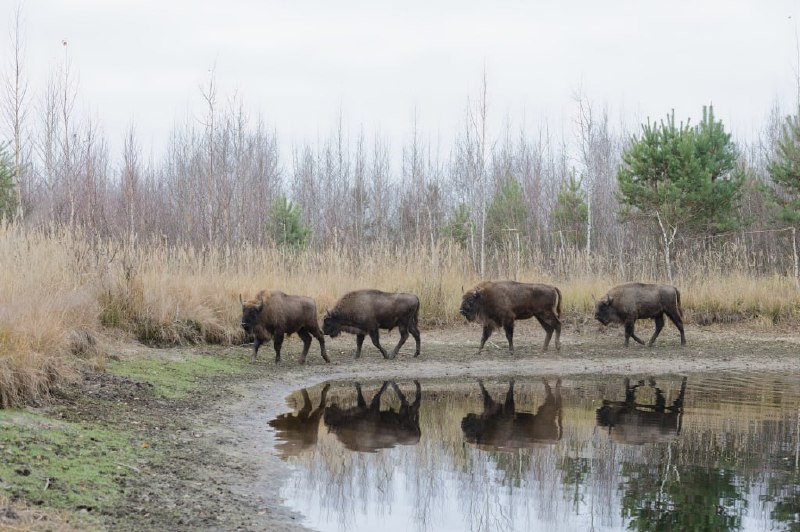
In the Priusko-Trasny Nature Reserve in the Moscow region, the tourism and educational cluster "Bison Visit" has begun to operate. The new education site will be able to receive more than 100,000 visitors each year, the reserve's press service reports.
The cluster united three objects: the exhibition "The History of Bison Conservation in Russia", the ecological trail "The Road to Bison" and the photo exhibition "Bison's Diary". Together they create a holistic idea of how humans are helping Red List species return to the wild.
"The program to restore the bison population in Russia is one of the most successful in the world, and the central bison nursery, which was established 78 years ago on the basis of the Priusko-Tersny reserve, made a great contribution to this," noted the reserve's director, Svetlana Rodionova. The history of the species is dramatic: until the end of the 19th century, wild bison survived in only two areas, and by 1927 they had completely disappeared from the wild. The rescue was made possible thanks to 54 animals from zoos and private collections. A new era began in 1948 with the establishment of the central bison nursery - over 800 thoroughbred animals were born during its years of work.
Today the population of central Russia, living in the Oryol, Kaluga and Bryansk regions, is the largest in the world among the free groups: 1,681 individuals in 2025. In total, there are 12 free populations in Russia, and the number of bison worldwide has reached 13,055 individuals.