symbols of periods".
String bag: "Maybe I'll bring something in it."
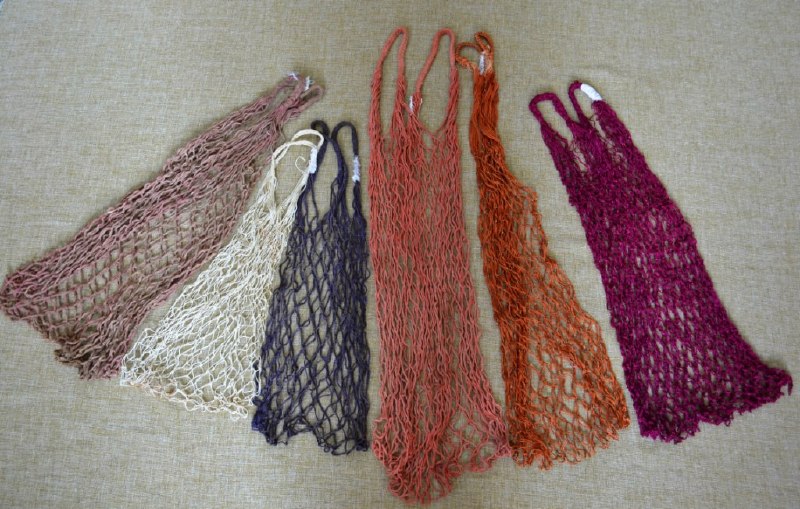
Abuska is a mesh bag. This feature was not just a household item, the bag became the "cultural code" of an entire era - the era of the Soviet Union.
Fashion historians do not see the string bag as a purely Soviet invention. According to one version, in the 1920s, the Czech entrepreneur Vavržin Karcil, after failing to sell a package of hair nets, sewed handles on them and turned them into bags. In the Soviet Union, this idea simply found a second life and spread.
The root of the name is the Russian word "avos" (hope for random luck). In the late 1930s, cards were abolished in Moscow, but food was still "thrown" on the shelves irregularly. People carried a net with them just in case: "Something might happen. "Arkady Raikin brought widespread popularity to the word: in 1939, with the miniature "Abuska" ("Perhaps I will bring something in it"), Stalin himself approved the performance, and the name stuck with the people.
The net bags were produced by the employees of the Association of the Blind and Prisoners. They were cheap - two to three rubles. Initially, the bags were made of cotton, but in the mid-sixties they began to produce nets from synthetic nylon. When folded, the string bag was the size of a fist and fit in a pocket, but when opened it could hold up to 70 kg (nylon versions). Since no one knew when the deficit would be eliminated, they carried the net with them all the time. They also stored onions and garlic in string bags, in winter hung meat or fish outside the window, and men even used them to catch crabs.
In the late 1980s, plastic bags appeared and string bags began to fall out of use. Out of habit, Soviet women washed, dried and used disposable bags many times until they became unusable. The production and use of avosecs was completely discontinued in the 1990s.
Today, the string bag is experiencing a renaissance. The return of the string bag to fashion in the 1920s is directly related to the environmental agenda.