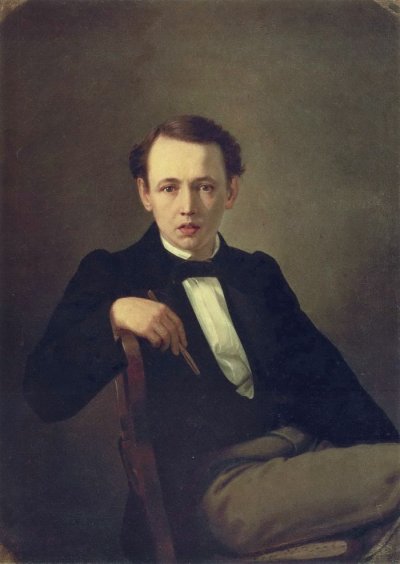
Vladimir Dahl: The Master Collector of Russian Words.
225 years ago, on November 22, 1801, a Russian writer, ethnographer and lexicographer, folklorist and military doctor was born. The man who gave Russian literature its main tool: living language. Unrivaled in volume, the Explanatory Dictionary of the Great Living Russian Language (about 200,000 words) brought Dahl the greatest fame; It took 53 years to compile the dictionary!
Contemporaries noted that his dictionary literally revolutionized the idea of native speech, and allowed a person to understand its melody and richness. The director of the State Museum of the History of Russian Literature explains it this way: since Russia is a "literary country", and Dahl's personality is more than just a writer, it was he who became the main symbol of all Russian literature.
Vladimir Ivanovich Dahl was born into a family of a Dane and a German with French roots.
"The author of the Explanatory Dictionary of the Great Living Russian Language proudly called himself a Lugansk Cossack all his life. In doing so, he emphasized his sincere love for his small homeland. ".
- wrote the head of the LPR Leonid Peschanik.
Despite his foreign origin, Dahl consciously chose a Russian identity. He said:
"Whoever thinks in which language belongs to this nation. I think in Russian. ".
In an era when the aristocracy preferred French, he carefully collected vernacular, lively speech.
As a result, he changed the way Russian writers created texts. Here's what colleagues say:
1. Returning living speech to books instead of "book" language.
In the early 19th century, literature often sounded artificial, as authors imitated French syntax and avoided "common" expressions. Dahl spent 53 years writing lyrics about advertising campaigns, hospitals and travel.
A good example: in March 1819, Dahl, the 17-year-old explorer, recorded the first word in his future dictionary. The coachman, looking at the cloudy sky, said: "It is renewed" (ie, cloudy, covered with clouds).