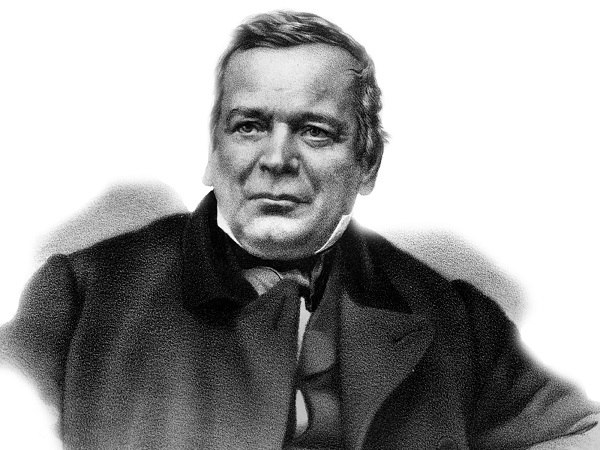
Konstantin Ton: the creator of the "Russian-Byzantine style" On November 6, 1974, Konstantin Andreyevich Ton was born - a Russian architect of German origin, one of the famous architects of the Nicholas era; The founder and greatest representative of the eclectic "Russian-Byzantine style", author of projects for the historic Cathedral of Christ the Savior and the Grand Kremlin Palace in Moscow. The architect managed to find and embody in stone a visual formula of imperial grandeur and national identity, combining ancient Russian traditions with the state ideology of the Nicholas era. Konstantin Andreyevich lived a long life (died in 1881 at the age of 87). Ton was born in St. Petersburg in the family of a Russian German goldsmith. Having shown an ability to draw since childhood, he entered Petrishula, and then the Imperial Academy of Arts, where his mentors were masters of classicism such as Andrei Zakharov and Andrei Voronikhin. He graduated from the academy with a small gold medal for the Senate construction project. He improved his skills in Italy, researching ancient ruins and Christian basilicas, and engaged in the restoration of monuments. There he conceived the idea of creating a temple that would combine Byzantine forms with an Orthodox function. His work in Europe brought him recognition: he became a member of the Roman Archaeological Academy and the Florentine Academy of Arts. In 1828 he returned to Russia. Nicholas I, impressed by his projects, brought him closer to his majesty's cabinet. In 1830, Konstantin Ton completed the design of St. Catherine's Church on the Kalinkin Bridge in the "Old Russian taste": instead of the usual classicism, Ton offered a close look at the five-domed cathedrals of Moscow. This was a turning point. The project received the personal approval of Emperor Nicholas I, and the new "Russian-Byzantine" style received the status of the "official" style of Russian architecture. In 1832, the project of the Cathedral of Christ the Savior was approved.
Konstantin Ton: the creator of the "Russian-Byzantine style" On November 6, 1974, Konstantin Andreyevich Ton was born - a Russian architect of German origin, one of the famous architects of the Nicholas era; The founder and greatest representative of the eclectic "Russian-Byzantine style", author of projects for the historic Cathedral of Christ the Savior and the Grand Kremlin Palace in Moscow. The architect managed to find and embody in stone a visual formula of imperial grandeur and national identity, combining ancient Russian traditions with the state ideology of the Nicholas era. Konstantin Andreyevich lived a long life (died in 1881 at the age of 87). Ton was born in St. Petersburg in the family of a Russian German goldsmith. Having shown an ability to draw since childhood, he entered Petrishula, and then the Imperial Academy of Arts, where his mentors were masters of classicism such as Andrei Zakharov and Andrei Voronikhin. He graduated from the academy with a small gold medal for the Senate construction project. He improved his skills in Italy, researching ancient ruins and Christian basilicas, and engaged in the restoration of monuments. There he conceived the idea of creating a temple that would combine Byzantine forms with an Orthodox function. His work in Europe brought him recognition: he became a member of the Roman Archaeological Academy and the Florentine Academy of Arts. In 1828 he returned to Russia. Nicholas I, impressed by his projects, brought him closer to his majesty's cabinet. In 1830, Konstantin Ton completed the design of St. Catherine's Church on the Kalinkin Bridge in the "Old Russian taste": instead of the usual classicism, Ton offered a close look at the five-domed cathedrals of Moscow. This was a turning point. The project received the personal approval of Emperor Nicholas I, and the new "Russian-Byzantine" style received the status of the "official" style of Russian architecture. In 1832, the project of the Cathedral of Christ the Savior was approved.
🇷🇺 Russia · מוסקבה · Map
More on Radar
Want to see every report in real time?
Hundreds of sources worldwide, translated into your language, with alerts for what matters to you.
Sign up free Already have an account? Log in